ober 2017 ll Talk Stephen Davis How many U.S. generals served as general-in-chief of the Union armies during the
Civil War? James I. (“Bud”) Robertson is a well-known Civil War historian and author. Can you name his first book? Who was the Confederate cavalry leader who led 500 horsemen out of Fort Donelson, refusing to surrender them in February 1862? One of McClellan’s seven infantry corps commanders at Antietam was shot and mortally wounded in the battle. Name? Arguably the first “microhistory” of a Civil War battle was George Stewart’s book, published in 1959, on what famous charge? Who was Lincoln’s vice president during his first term (1861-65)? Name the only woman to whom the U.S. Medal of Honor was conferred for her Civil War service. Southern sympathizers in the Midwest during the war were called “Copperheads,” but their alleged organization was named “Knights of the ____ _____.” Where was the first Civil War battlefield monument erected? What do Jefferson Davis
ton (1945- ) have in common? (Hint: “If I Saw You in Heaven”) page 45 for answers. k Review Editor. He can be con-
Vol. 42, No. 3 Battlefield Of Franklin Land Prese By GreGory L. Wade FRANKLIN, Tenn. — What is considered the bloodiest acreage i the Nov. 30, 1864, Battle of Frank is now being reclaimed as part of evolving Carter Hill Battlefield P Local preservation leaders recentl
from owners Reid and Brenda Lovell after a months-long process of coordinating various funding sources for the critical 1.6 acres adjoin the Carter House, a major battle landmark. Details were recently provided a press conference led by Franklin Charge board member Julian Bibb, who praised the “remarkable transition” of the Franklin battlefiel Franklin’s Charge is a coalition o civic and preservation groups who joined together more than ten year ago to purchase local battleground Over 150 years ago the Army of Tennessee stepped off in a series of charges to be virtually destroy by Federals under John Schofield i hopes of taking Franklin and later Nashville. At that time, most of the terra was open farmland on the outskirts of what was once a small Middle Tennessee farming community. Over time development covered much of the battlefield with houses, light dustry, and small businesses. All that remained of the critic area where the Confederates temporarily broke the Federal line wa the small farmhouse and a few acre known as the Carter House farm. The 1.6 acres purchased, which adjoin the southern boundary of th Carter House property, is comprise of two lots. Today, they are occup
Purchase that were turned over to the City of Franklin Parks Department by Franklin’s Charge and the Battle o Franklin’s Trust (BOFT), managers of the Carter House the nearby Car ton Plantation. The structures wil removed in coming months, possibly relocated for other use. The purchase is only the latest in a long and arduous effort to re build the Franklin battlefield. “It had to be a miracle,” quipp Civil War Trust (CWT) President James Lighthizer, referring to the most recent acquisition. Local res ident Michael Grainger, long time Trust board member and former chairman, said, “Local leadership has been incredible and will conti ue to be a partner [with the CWT]. In 2005, after years of frustra attempting to preserve Franklin ba tleground, local preservationists cided it would have to be done the hard way, by buying properties, of ten with buildings on them. The largest parcel of land was originally a local golf course sla to be sold to a developer to build houses on what was the right flank of the Confederate attack north to ward the Federal lines just south the town. It was then that Franklin’s Cha came into existence. Funds have
chase from private donors, the CWT the City of Franklin and others. T 110-acre segment, now fully interpreted and known as the Eastern Flank Battlefield, is what got the preservation ball rolling in Frank Since that time nine other parc in proximity to the Carter House have been purchased and have been, or will be, turned over to the Fra
at the Lovell purchase regory L. Wade photos)
lin Parks Department, according t Bibb. But it was the land just south Carter House, long considered the most bloodied ground in Franklin, and some say in America, that was the most coveted. BOFT Chief Executive Officer Eric Jacobson noted, “to not have this ground reclaimed and preserv would be like having Omaha Beach cut out of Normandy.” The most recent acquisition evolved when Franklin’s Charge an the BOFT began discussions with t Lovells, who have a strong sense the history of the land, having g up in Franklin. “I was born and raised in Fran lin on ground many believe should have been a national park,” said Lovell. He recalled when visitors came to town and had to envision what happened, not walk on ground where it transpired. “My great-grandfather, who fou here, and my parents would be pro of what we are doing here today,” said at the press conference. The Franklin Board of Mayor and Aldermen voted unanimously in February to fund part of the remaining debt on the Lovell property purchase. The previously
paid by the city on a non-interes basis over seven years. These funds will cover the bal now bridged by a local bank and w
be derived from the city’s hoteltel tax. Local banker Chuck Isaac was instrumental in working out t loans. All the city funds are all
by his employer, First Farmers an Merchants Bank.
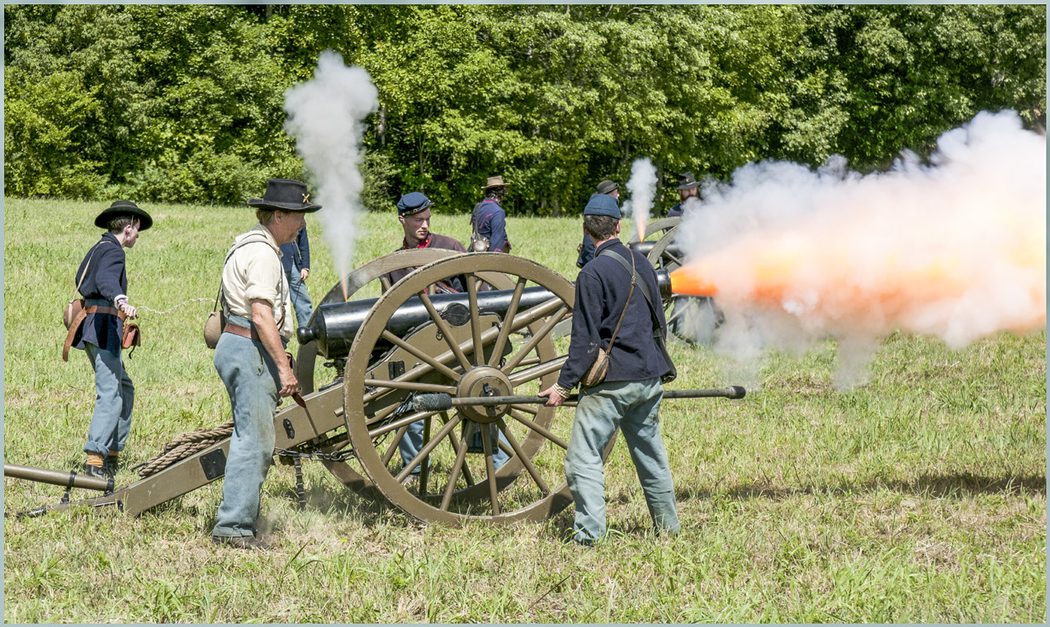
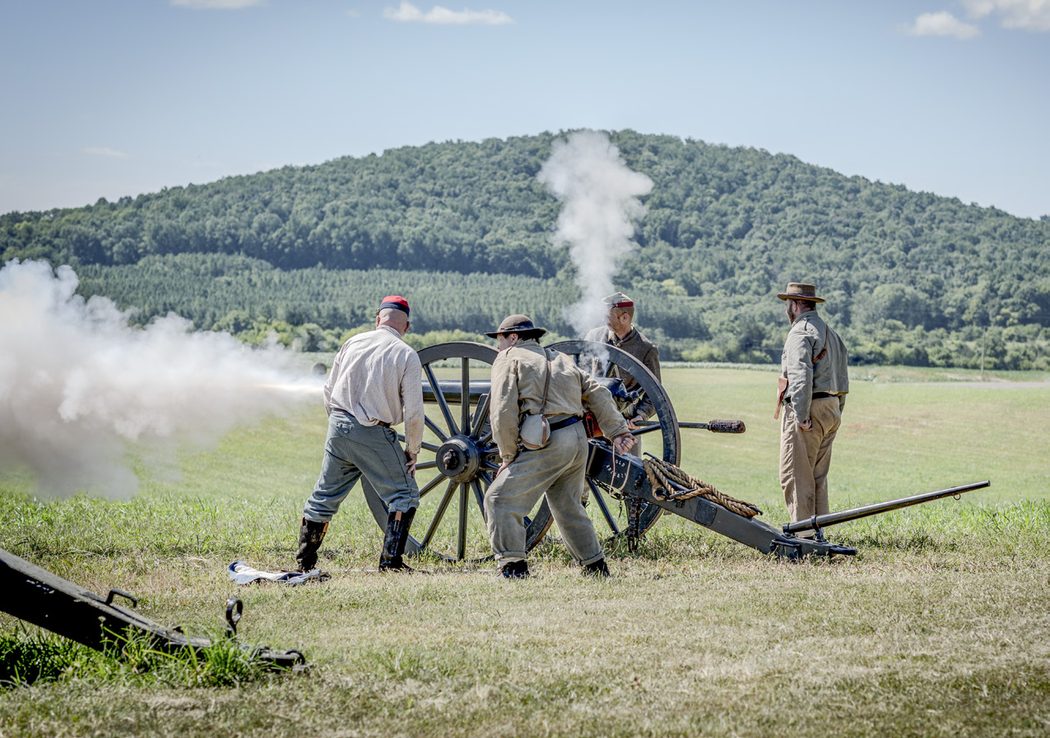
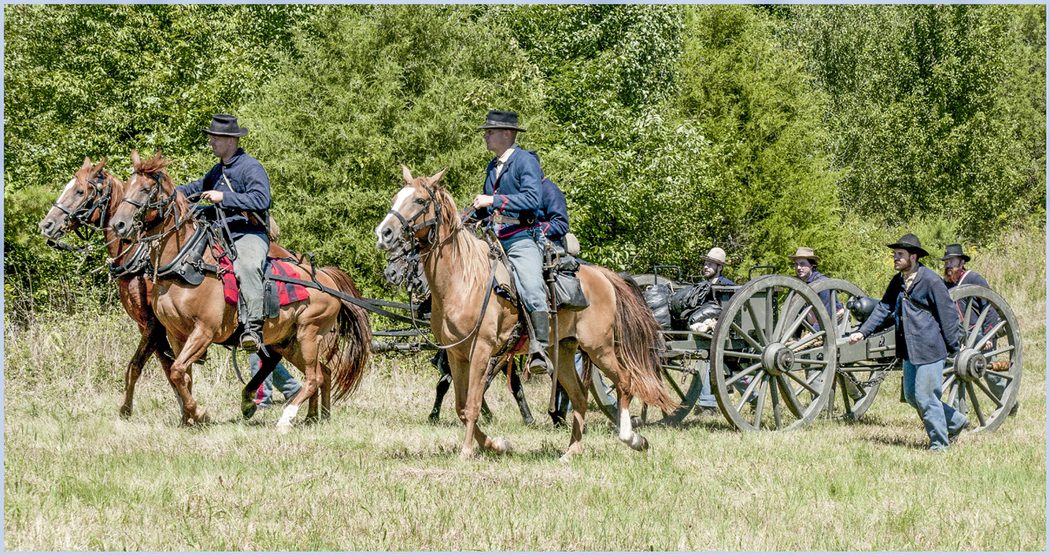
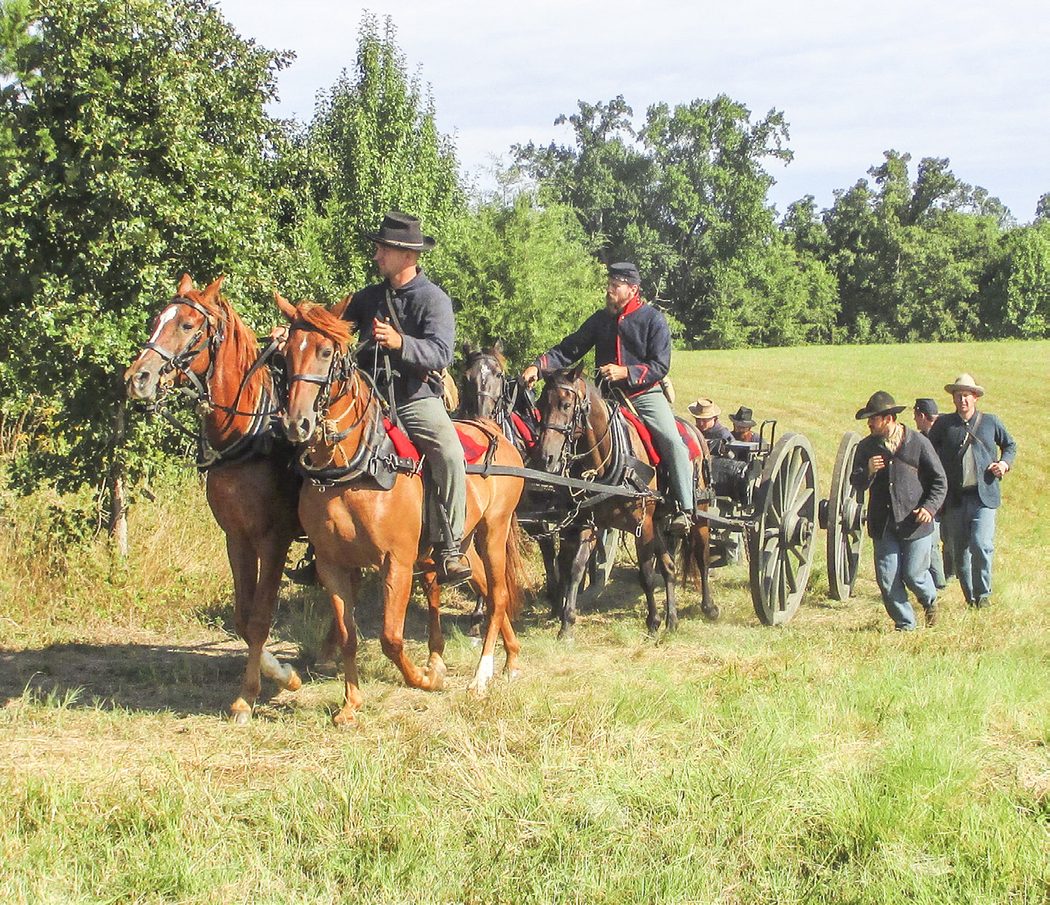
By Joseph Bordonaro August 9, 1862, Confedereneral Jubal Early encouncavalry and artillery forcUnion General Nathaniel located on the plain above Run and near Cedar Moun(also known as Slaughter’s ain). So, it was fitting that iving history event comating the Battle of Cedar ain featured an artillery
Vol. 42, No. 3 Battlefield Of Franklin Land Preser By GreGory L. Wade FRANKLIN, Tenn. — What is considered the bloodiest acreage in the Nov. 30, 1864, Battle of Frankl is now being reclaimed as part of t evolving Carter Hill Battlefield Pa Local preservation leaders recently
from owners Reid and Brenda Lovell after a months-long process of coordinating various funding sources for the critical 1.6 acres adjoin the Carter House, a major battle landmark. Details were recently provided a a press conference led by Franklin’ Charge board member Julian Bibb, who praised the “remarkable transition” of the Franklin battlefield Franklin’s Charge is a coalition of civic and preservation groups who joined together more than ten years ago to purchase local battleground. Over 150 years ago the Army of Tennessee stepped off in a series of charges to be virtually destroye by Federals under John Schofield in hopes of taking Franklin and later Nashville. At that time, most of the terrai was open farmland on the outskirts of what was once a small Middle Tennessee farming community. Over time development covered much of the battlefield with houses, light dustry, and small businesses. All that remained of the critica area where the Confederates temporarily broke the Federal line was the small farmhouse and a few acres known as the Carter House farm. The 1.6 acres purchased, which adjoin the southern boundary of the Carter House property, is comprised of two lots. Today, they are occupi
Purchase that were turned over to the City of Franklin Parks Department by Franklin’s Charge and the Battle of Franklin’s Trust (BOFT), managers of the Carter House the nearby Carn ton Plantation. The structures will removed in coming months, possibly relocated for other use. The purchase is only the latest in a long and arduous effort to rebuild the Franklin battlefield. “It had to be a miracle,” quippe Civil War Trust (CWT) President James Lighthizer, referring to the most recent acquisition. Local resident Michael Grainger, long time Trust board member and former chairman, said, “Local leadership has been incredible and will contin ue to be a partner [with the CWT].” In 2005, after years of frustrat attempting to preserve Franklin bat tleground, local preservationists d cided it would have to be done the hard way, by buying properties, often with buildings on them. The largest parcel of land was originally a local golf course slat to be sold to a developer to build houses on what was the right flank of the Confederate attack north toward the Federal lines just south o the town. It was then that Franklin’s Char came into existence. Funds have
chase from private donors, the CWT, the City of Franklin and others. Th 110-acre segment, now fully interpreted and known as the Eastern Flank Battlefield, is what got the preservation ball rolling in Frankl Since that time nine other parce in proximity to the Carter House have been purchased and have been, or will be, turned over to the Fran
at the Lovell purchase regory L. Wade photos)
lin Parks Department, according to Bibb. But it was the land just south Carter House, long considered the most bloodied ground in Franklin, and some say in America, that was the most coveted. BOFT Chief Executive Officer Eric Jacobson noted, “to not have this ground reclaimed and preserve would be like having Omaha Beach cut out of Normandy.” The most recent acquisition evolved when Franklin’s Charge and the BOFT began discussions with th Lovells, who have a strong sense o the history of the land, having gr up in Franklin. “I was born and raised in Frank lin on ground many believe should have been a national park,” said R Lovell. He recalled when visitors came to town and had to envision what happened, not walk on ground where it transpired. “My great-grandfather, who foug here, and my parents would be prou of what we are doing here today,” said at the press conference. The Franklin Board of Mayor and Aldermen voted unanimously in February to fund part of the remaining debt on the Lovell property purchase. The previously
paid by the city on a non-interest basis over seven years. These funds will cover the bala now bridged by a local bank and wi
be derived from the city’s hotel-m tel tax. Local banker Chuck Isaacs was instrumental in working out th loans. All the city funds are allo
by his employer, First Farmers and Merchants Bank.