an important impact on you and your development as a Civil War historian.” Lightning Round (short answers with a one-sentence
War site you’ve not yet visited? Chattanooga (technically
time to stop and visit them). Favorite ECWS b A Season of Slaughter by
his book down). It was informative, without being overwhelming, well written, easy to read quick paced.
March is a symbolic month in American Revolutionary
Era history. On the 5th of this month in 1770, blood was shed
on the streets of Boston in wh became known as the Boston Massacre. The 250th anniversary just passed, and ERW historian Mark Maloy was present. Check out ERW’s Facebook page
videos/213635499825056. Five years later, on March 23rd, Virginia delegate Patric Henry rose at the Second Virgi Convention and uttered the wor that would become a rallying c “Give me liberty, or give me death.” For more great Revolution-e history, stop by our blog,
Kristen works with the Missouri Civil War Museum at historic Jefferson Barracks in St. Louis. She splits her time between Missouri and Northern Virginia. You can read her ful ECW bio here: https://emerging
with a book I am writing to ra proceeds for the historic reno
tion of his home in Louisiana, As a co Photogr
Deadline for submissions is the 20th of each month. E
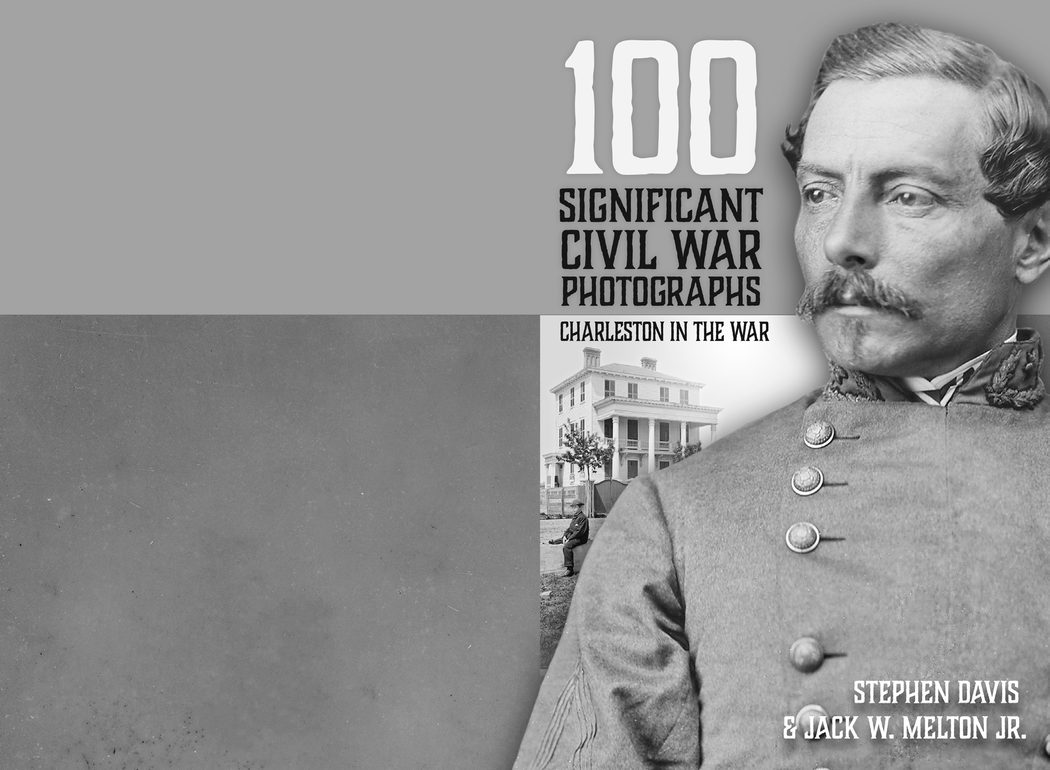
IN THE WAR 100 Significant Civil War Photographs: Charleston in the War features newly restored images of WAR scenes in the famed city, taken 1860–1865. The cameramen include the better-known, such as GeorgeCharleston ivil War Photographs: N. Barnard in and George the War S. Cook, features newl as famed f scenes in the somecity, lesser-known taken 1860–1865.ones: Samuel Cool Charles Quinby, the partners Haas & Peale, lude the better-known, such as George N. Barnard and Osborn & Durbec. s well as some lesser-known ones: Samuel Cooley, Charles ers Haas & Peale, Text Osborn & Durbec.Davis and Jack Melton by Stephen avis and Jackaccompanies eacheachfeatured Melton accompanies photo featured photograp ctured scenesdescribing the surrounding pictured scenes andselect the and the history ariety of settings: that portion surrounding them.ofThe them. The Charleston selected known as T images nt District” variety (the areaof of settings: the city destroyed by the Great that portion F of Char , the Charleston Arsenal, as TheandBattery, the many churches “Burntthat al known the Distr call theirs “the Holy City.” Special sections of this book a area of the city destroyed by the Great Fire of ge Blakely guns imported from England by the Confederates December 1861), the Charleston Arsenal, and Barnard’s views. the many churches that allow Charlestonians to The Defense leston goes back call theirs “theto Holy City.” of Charleston Special Harborof this sections
derate major of engineers, and to Reminiscences of book are devoted to the huge Blakely guns Moultrie in 1860-’61 (1876) by Capt. Abner Doubleday, Federal . Since then imported from England Charlestonians by the Confederates have contributed to the his tably Robert N.close-ups Rosen andof Barnard’s Richard views.III. The histor W. Hatcher 100 Significant Photographs draws on these and other works. is its reliance upon the writings of actual participants, suc he (1842–1914) and Emma Edwards Holmes (1838–1910). The history of Civil War CivilCharleston goes back to
iterature, theThe 100 Significant WarDefense of Charleston offers rewards War Harbor (1890) by John for all readers, ohnson, Confederate major of engineers, and to serious student. Reminiscences of Forts Sumter and Moultrie in 1860-’61 (1876) by Capt. Abner Doubleday, Federal second-in-command. Since then Charlestonians have contributed to the history of their city, notably Robert N. Rosen and
Richard W. Hatcher III. The historical text surrounding 100 Significant Photographs draws on these and other works. A unique feature is its reliance upon the writings of actual participants such as Augustine T. Smythe (1842–1914) and Emma Edwards Holmes (1838–1910). As a contribution to this literature, 100 Significant Civil War Photographs: Charleston in the War offers rewards for all readers, from the casual novice to the serious student. 160 pages, Over 100 Photos, Maps, Index, Bibliography, Softcover. ISBN: 978-1-61850-167-7 Stephen Davis