followed his wounding at Cape Gloucester, New Britain, January 2, 1944. The Battle of Cape Gloucester was fought in World War II’s Pacific Theater. He add-
ed that he learned something interesting from Burke Davis (1913–2006) in his biography of Colonel Chester Puller. “Chesty” Puller, whom Bearss described as a “Marine’s Marine,” was reading Lee’s Lieutenants during the same time period. Bruce Catton (1899–1978) wrote the three-volume series, The Army of the Potomac, in the early 1950’s. The trilogy contains these titles:
Mr. Lincoln’s Army (1951) Glory Road (1952) Stillness at Appomattox (1953)
He remembered reading this • series when he was doing graduate work at Indiana University. The last volume, Stillness at Appomattox, won the Pulitzer Prize for History. It also won the National Book Award for non-fic- • tion. Ed laughed and said someone asked, “Who won the Civil War Centennial, (1961–1965)?” • He answered “Bruce Catton.” He noted that his favorite auto biography was Personal Memoirs • of Ulysses S. Grant, by Ulysses S. Grant, New York: Charles L. Webster & Company, 1885–86. The famous author Mark Twain (Samuel Langhorne Clemens) paid for its publication. Grant
struggled for a year with throat cancer as he wrote his memoirs. The final pages were delivered to Mark Twain five days before
• T. Harry Williams Award • Man of the Year at Vicksburg
• Harry S. Truman Award for Meritorious Service in the
rian Ed Bearss leads a Chambersburg Civil War ba Chambersburg Civil War Seminars & Tours.
field of Civil War History Fellow of the Company of Military Historians Nevins–Freeman Award from the Civil War Round Table of Chicago in 1980 Distinguished Service Award from the Department of the Interior in 1983 Commendation from the Secretary of the Army in 1985 The Civil War Trust (now American Battlefield Trust) created the Ed Bearss Award for achievements in historic preservation and made him the first recipient in 2001 Texas Star Award from the Texas Civil War Preservation Seminar in 2002 T. Harry Gatton Award, Raleigh Civil War Round Table in 2008 A portrait bust of Bearss by Arthur Downey, a Washington, D.C., artist, was unveiled near the USS Cairo
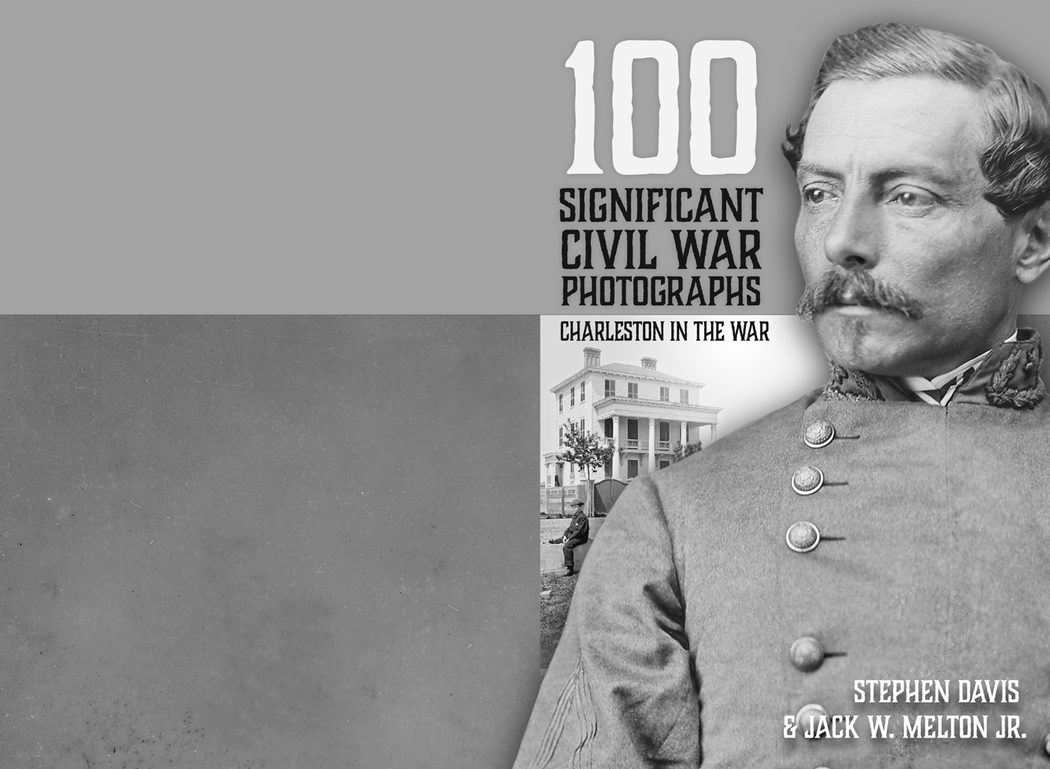
IN THE WAR 100 Significant Civil War Photographs: Charlesto in the War features newly restored images of
IN THE includeWAR scenes in the famed city, taken 1860–1865.
The cameramen the better-kn as GeorgeCharleston aphs: N. Barnard in and George the War S featu as famed somecity,lesser-known taken 1860–1865. ones: Samuel Charles Quinby, the partners Haas & Peale, known, such as George N. Barnard and Osborn & Durbec.
lesser-known ones: Samuel Cooley, Char le, Text Osborn & Durbec.Davis and Jack Melton by Stephen accompanies eacheachfeatured
Melton accompanies featured phot the surrounding and the history pictured scenes an them. The gs: that portion surrounding them. ofThe Charleston selected known im
(the areaof known of settings: the city destroyed Arsenal, as TheandBattery, the many the by the G that portion churches “Burntt
e Holy City.” Special sections of this book are area of the city destroyed by the Great Fire of s imported from England by the Confederates December 1861), the Charleston Arsenal, and
the many churches that allow Charlestonians to goes back call theirs “the The Defense to Holy City.” of Charlesto Special s te major of engineers, and to Reminiscences of
book are devoted to the huge Blakely guns 860-’61 (1876) by Capt. Abner Doubleday, Federa rlestonians have contributed to the history and imported from England by the Conf
lose-ups andof Barnard’s Richard views.III. The h W. Hatcher Photographs draws on these and other works.
upon the writings of actual participants, such a nd Emma Edwards Holmes (1838–1910). The history of Civil WarCivilCharleston
ure, 100 Significant War The WarDefense of Charleston offers rewards Harbor (189 for all readers, Johnson, Confederate ious student. major of eng Reminiscences of Forts Sumter and Moultrie in 1860-’61 (1876) by Capt. Abner Doubleday, Federal second-in-command. Since then Charlestonians have contributed to the history of their city, notably Robert N. Rosen and
surrounding 100 Significant Photographs draws on these and other works. A unique feature is it
reliance upon the writings of actual participant such as Augustine T. Smythe (1842–1914) and Emma Edwards Holmes (1838–1910).
As a contribution to this literature, 100 Significant Civil War Photographs: Charleston in the War offers rewards for all readers, from the casual novice to the serious student.
160 pages, Over 100 Photos, Maps, Index, Bibliography, Softcover. ISBN: 978-1-61850-167-7