Counties.” Governor Morton the Constitution in our current What of the designation of home viewed the southern half of the war on terror, conclusions about grown, white terrorist groups? state as a nest of Copperhead ac- the actions of Civil War-era tivity populated by southern sym- Republicans regarding racial re- will be able to visit your high
pathizers, Democrats, and secret settlement, white racist terrorism, school history teacher, and intelsocieties. There was serious con- and about the persistent relevance ligently discuss your understand-
cern that southern Indiana would of the Milligan decision.” In the ing of ex parte Milligan and its secede and join the Confederacy. end, the editors wonder aloud ramifications for today.
A total of nine men were seized, about rethinking “the fundamenfive were released or fled, and tal nature of liberal constitution- Salvatore Cilella is the retired the remaining four were tried alism itself.” (p. 21). in Indianapolis during October It cannot be overstated, this is Between 2001 and ide our readers with timely 1864, charged with inciting rebel- an essential read. It is well writ- as President and CEO of the Indiana nificant Civil War research and lion, conspiracy against the fed- ten, jargon-free, without exces- Historical Society. He is the author eral government, and aiding and sive legalese. It is important to of Upton’s Regulars, A History of
abetting the enemy. In December, our understanding of America’s the 121st New York Volunteers in Milligan and two compatriots long lasting, tragic turmoil be- the Civil War, University of Kansas were convicted by a military tween 1861 and 1865 that bedev- Press, 2009; editor of The Selected court and sentenced to hang. ils us yet today. This book raises Correspondence President Andrew Johnson later serious questions that beg for an- Emory Upton, 2017, University of commuted their sentences to life. swers. Once war is declared on Tennessee Press and Till Death Do emembered it had something to In 1865, Milligan’s lawyers filed terrorism, should captured for- us Part, The Letters of Emory and h Copperheads, Lincoln, a writ of habeas corpus for justi- eign national terrorists be tried Emily Upton, 1868-–870, University aps the Constitution. fication of their initial arrest and by civilian or military courts? of Oklahoma Press, 2020. all, the title said it was le- further, whether they should have ic and dry. been tried by a military court. Fear no longer. The editing Their case ended up in the am of Stewart L. Winger and Supreme Court whose 1866 rul- Digital Issues of CWN are available by hon W. White have accom- ing became an important mile-
bright, intelligent and compre- history. Three questions before archives at CivilWarNews hensible writing and editing, the court were: “Was a writ of the two have not only explained habeas corpus necessary for Milligan historically but updat- Milligan?” Should he be reed it and made it relevant to cur- leased?,” and most importantrent events. Not every historical ly, “Can military courts operate incident lends itself to that kind when civilian courts and law and of treatment. In addition, the duo order prevail?” The court ruled and their 10 co-essayists explore against the government in the the impact of Milligan on civil majority opinion handed down by rights/liberties then and the pres- Justice David Davis. One of the ent day. Think military tribunals more surprising revelations, parin Guantanamo for the last two ticularly to this reviewer, was that decades. Benjamin Franklin “Beast” Butler Ex Parte Milligan deals with was the lead attorney for the govthe legality of using military ernment. The Supreme Court tribunals involving civilians held that military courts were not during wartime while local civil- legal where the existing civilian ian courts are in operation and law was alive and well and opavailable for the dispensation erating. The court reaffirmed the
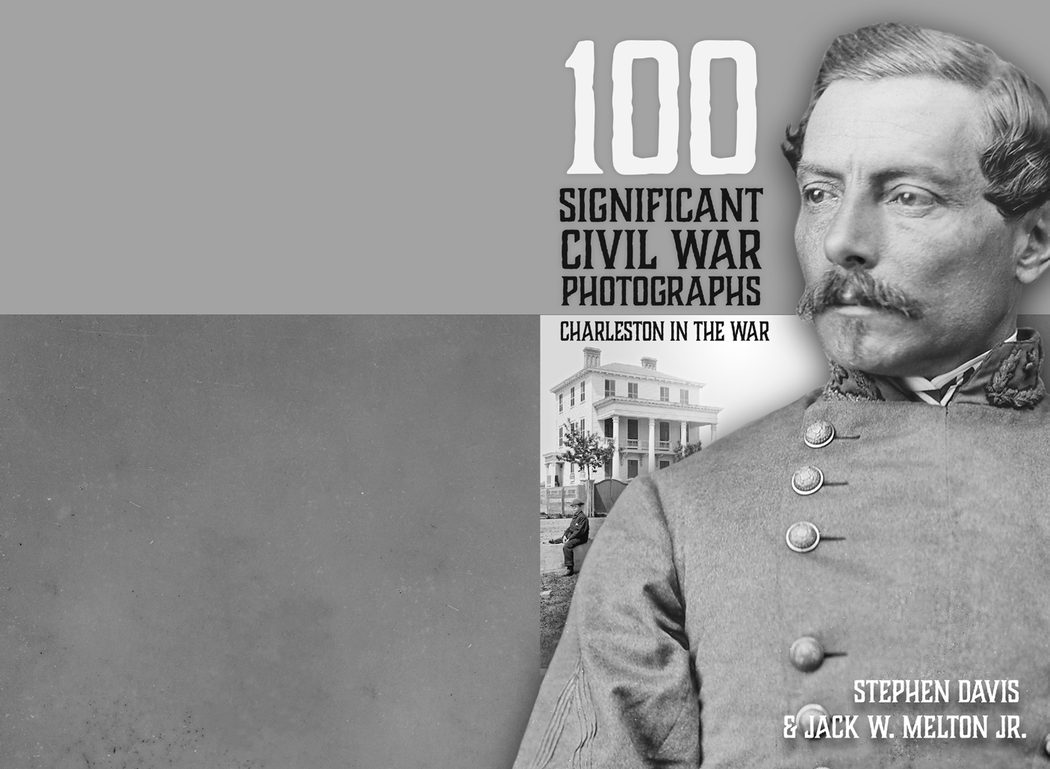
of justice. Lambdin P. Milligan right of the military to continue CHARLESTON (farmer/lawyer), Stephen Horsey military tribunals where civilian (private citizen), William A. authority had completely col- IN THE WAR (physician and politi- lapsed or been overthrown. It also 100 Significant Civil War Photographs: Charle in the War features newly restored images of , and Andrew Humphreys affirmed the right of Congress to CHARLESTON IN THE includeWAR scenes in the famed city, taken 1860–1865. The cameramen the better . Representative) were all legislate where and when military as GeorgeCharleston 100 Significant Civil War Photographs: N. Barnard in and George the War fe restored images of scenes in the as famed somecity,lesser-known taken 1860–1865. ones: Sam rmed anti-war, anti-Lin- courts were appropriate. Charles Quinby, the partners Haas & Peale, The cameramen include the better-known, such as George N. Barnard and Osborn & Durbec. George S. Cook, as well as some lesser-known ones: Samuel Cooley, C oln, Copperheads entrenched In this well-researched, Quinby, the partners Haas & Peale,Text Osborn & Durbec.Davis and Jack Melt by Stephen Text by Stephen Davis and Jack accompanies Melton accompanies eacheachfeatured featured p southern Indiana. At the time, well-documented, and well-writ- describing the pictured scenesdescribing images depict a variety of settings: the surrounding and the history that portion surrounding pictured scenes them. ofThe Charleston selected
unties below Indianapolis were ten treatise, twelve authorsBattery, in-the “Burnt District” variety of December 1861), the Charleston (the areaof known of settings: the city destroyed Arsenal, as TheandBattery, the many the by th that portion churches “Bur
ecidedly pro-Confederate, and cluding the two editors metic- Charlestonians to call theirs “the Holy City.” Special sections of this book ar area of the city destroyed by the Great Fire devoted to the huge Blakely guns imported from England by the Confederates and close-ups of Barnard’s views. December 1861), the Charleston Arsenal, and deed were called “Butternut ulously lay out their arguments the many churches that allow Charlestonians t The history of Civil War Charleston goes back call theirs “the The Defense to Holy City.” of Charle Special
(1890) by John Johnson, Confederate major of engineers, and to Reminiscences of for the reexamination and second-in-command. rele- Since thenbook Forts Sumter and Moultrie in 1860-’61 imported are devoted to the huge Blakely guns (1876) by Capt. Abner Doubleday, Fed Charlestonians have contributed to the hi from England by the C city, notably Robert N.close-ups Rosen andof Barnard’s views.III. Th vance of Milligan to today’softexttheir war Richard W. Hatcher surrounding 100 Significant Photographs draws on these and other works. A unique feature is its reliance upon the writings of actual participants, such
on terror. The book is laid out Augustine inT. Smythe (1842–1914) and Emma Edwards Holmes (1838–1910). The history of Civil War As a contribution to this literature, 100 Significant CivilCharleston War four sections: The Meaning of Photographs: Charleston in theThe War Defense of Charleston offers rewards Johnson, from the casual novice to the serious student. Confederate Harbor ( for all readers, major of Martial Law; The Copperheads Reminiscences of Forts Sumter and Moultrie in 1860-’61 (1876) by Capt. Abner Doubleday, to: of the Middle West; The Milligan Decision; and The Precedential Federal second-in-command. Since then Charlestonians have contributed to the histor of their city, notably Robert N. Rosen and Richard W. Hatcher III. The historical text surrounding 100 Significant Photographs draws Power of Milligan. When a “civ- on these and other works. A unique feature is
reliance upon the writings of actual particip il war” book signals relevance, it such as Augustine T. Smythe (1842–1914) and Emma Edwards Holmes (1838–1910). behooves all of us to sit up and As a contribution to this literature, 100 Significant Civil War Photographs: Charleston 379 take notice. Perhaps the most important the War offers rewards for all readers, from casual novice to the serious student. 160 pages, Over 100 Photos, Maps, points in this book are what the Index, Bibliography, Softcover. ISBN: 978-1-61850-167-7 editors call the “startling recent scholarly conclusions about the
The War For Missouri 1861– 1862. By Joseph W. McCoskrie. Photographs maps, illustrations appendices, glossaries, index, chapter notes and bibliography.
Initially considered Confederate state, Missouri was among the most hotly contested areas of the nation. Several wo cover the Civil War’s Western Theater; however, very few cover activities that occurred in Missouri. Joseph McCoskrie remedies this situation with his T War For Missouri 1861–1862. He asserts that the national Confederate leadership government failed to recognize the importance of the geographic, demographic, and economic advantages Missouri provided in waging a military contest. This
ironic since ten bitterly contest battles occurred in Missouri before the First Battle of Manassas on July 21, 1861. This work provides concise and insightful topical discussions ar ranged as chapters. McCoskrie provides a detailed discussion of each engagement’s significance. He includes suggested reading lists, colorful illustrations and detailed maps that help the reader understand a particular engagement. This study is an excellent reference tool reminding us that Missouri’s soldiers came in many different forms: state troops, regular soldiers with varying enlistment periods, Hom Guards, and guerilla fighters. Hi work provides scholarly research in a format that is easy to read and understand. McCoskrie does an excellent job describing how Missouri’s geograph demographics, and political situation fit into the beliefs of local citizens. While proving his thesis, he takes the reader on a picture journey of the views shared by various military units, guerrilla fighters, politicians, ordinary folk . In the end, this somewhat forgotten state saw many battles fought and lives lost; lots of families might say “for what?” McCoskrie is a Virginia Military Institute graduate who served twenty-eight years in the military. He then completed a twenty-five-year career in banking. He has also shaped the leadership of future military leaders serving as an assistant professor of military science in the Illino State and Missouri Universities’ ROTC programs.
Richard Blumberg has reviewed eighteen years, and has also contributed a couple of articles for
The Presidents vs. The Press: The Endless Battles Between the White House and
the Media-from the founding Fathers to Fake News. By Harold Holzer. Bibliography, Notes and Index, 576 pp., 2020. Dutton. Penguinrandomhouse.
This new title deals with the relationship between presidents and the press opens with George Washington being concerned that newspapers provided important information to the enemy during the Revolutionary War. Once he became president, he looked for the positives the press can provide the public but was blind to the realities that they are ofte concerned about selling papers without necessarily always providing honest coverage of his administration. In The Presidents vs. The Pre distinguished Lincoln historian Harold Holzer examines the challenges presidents have had since the birth of our nation in deali with the press. Covering many presidents and incorporating subjects either ignored or only lightly touched on in other pres idential histories, this is a bo
of unusual scope and complexity. Holzer has divided this stud
into five parts from the foundin fathers’ “Malignant Industry,”, to 19th Century presidents and “A Government of Newspapers,” early 20th presidents’ “From The Bully Pulpit To The Fireside,” the 1960’s-1970’s a “Far Greater Information,”—and finally to Truth Is the Glue” covering the last fifty years. He provides fi rate insight how presidents from George Washington to Donald Trump have been unhappy with press coverage that today has been called fake or false news. Holzer allows readers to discover the actions and reactions from the birth of the nation
through the twenty first century chief executives. He provides lively examples and analysis of
disagreements and respites by Richard Nixon; mutual distrust by Bill Clinton as well as occasional collaboration by Theodore Roosevelt. He moves on to “sanitized news” and fake news put out Lyndon Johnson and efforts by both press and presidency to dominate the other. In the chapters on George Washington, John Adams, and Thomas Jefferson, Holzer provides a clear understanding that these presidents took offense with their press coverage and at times were outraged and attempted to take measures to silence newspapers and reporters. While Washington remained silent except to his close friends and ca net members concerning his feelings, it is remarkable that our president withstood so much crit icism from the ‘infamous scribblers’ without responding as hav future presidents such as Thomas Jefferson, Abraham Lincoln, Richard Nixon, Bill Clinton, and Donald Trump. Both Washington and John Adams supported laws that eventually passed and became known as the Alien and Sedition Act under Adams. While Thomas Jefferson had no issues holding journalists an swerable for slander and did not necessarily believe everything written in newspapers, more than most presidents he held that the press was free and should not be interfered with by the Federal government. The implication of the new, broader arguments led to long term tension between the press and citizens for fifty yea with Abraham Lincoln regenerating sedition acts during the Civ War. In the nineteenth century, Andrew Jackson successfully used former newspapermen in his administration to distort th
lines between his presidency and reporters as did Abraham Lincoln
by hiring his secretaries who worked in the press. They both used censorship while fighting against secession. In the early twentieth centur Theodore Roosevelt worked with several progressive muckrakers such as Lincoln Steffens to investigate trusts and became the nation’s first progressive presi dent producing many significant changes including conservation and the establishment of national parks. While Woodrow Wilson surrendered much influence to th press, he also produced the firs campaign commercial, demonstrated Lincolnesque qualities b
telling witty stories at a 1914 ne conference, created messaging through the Federal Committee on Public Information, and curtailed dissent. Presidents who demonstrated an ability to circumnavigate the changing media scenery included Washington, Jackson, Lincoln, both Roosevelts, and Kennedy. After 1974, the press became skeptical of the U.S. elected chie executives because of Vietnam and Watergate, and tried to keep leaders honest. Ford, Carter, Reagan, both Bushes, Clinton, Bush, Obama, and Trump have all attempted to be transparent with the fourth estate, they often found themselves being questioned concerning their motives, policies, and moral standing. Holzer makes a strong argument that, while critics of Donald Trump complain that he bypasses the press by utilizing twitter, others have optimized media platforms to persuade American audiences. Thomas Jefferson did this by originating official admin istration newspapers, Abraham Lincoln in writing newspaper articles and forwarding letters to papers. Franklin Roosevelt used the radio for his fireside chats; Ronald Reagan made his weekly radio broadcasts, and Barak Obama utilizing the internet. Throughout this excellent and fast-moving monograph, readers will find that while Trump is preoccupied with the media reporting of his presidency and has a combative relationship with the press, so did a long list of earli presidents. This study weaves a fascinating story on the decisions made by nineteen American presidents and reveals significant changes in presidential press coverage that affected the success of their time in office. This treatment is groundbreaking, balanced, meticulously researched, very read-
able, provides thoughtful analysis and explanations and is a real page turner.
David Marshall is a high school American history teacher in the Miami-Dade School district for the past thirty-four years. A life long Civil War enthusiast, David is president of the Miami Civil War Round Table Book Club. In addition to numerous reviews in tions, he has given presentations to Civil War Round Tables on Joshua Chamberlain, Ulysses S. Grant, Abraham Lincoln, the Battle of Gettysburg, and the Common Soldier.
John Bell Hood. By Stephen Davis. Maps, bibliography, foo notes, index, 358 pp., 2020.
Mitch: So you hate baseball? Bonnie: No, I like baseball. just never understood how you guys can spend so much time di cussing it. I have been to gam but I don’t memorize……who played third base for Pittsbur in 1960. – Mitch and Ed (simul taneously): Don Hoak More about the Civil War’s Eas Grant’s Victory: How Ulysses S. Grant Won the Civil War, by Bruce L. Brager. Gilford, Conn Stackpole Books, 2020. 166 pp.
Books praising General Ulyss S. Grant have developed into quite a cottage industry over past forty years. In fact, it ly impossible to peruse a Civi
Inside Baseball Many people who read Civil War News are like the characters played by Billy Chrystal and Bruno Kirby in City Slickers, while in the broader world most people resemble the character played by Helen Slater. Into Tennessee & Failure: John Bell Hood is written for the Eds and Mitches of the Civil War world. In the second volume of his fine study of General Hood, Steve Davis continues to delve into his tory and historiography in a way that will grab and hold the atten tion of readers who (if I may con tinue the metaphor) already know who played third for the Pirates in 1960. These readers want to learn more about Hoak’s batting average and other stats; about controversies involving him and
other players; about questionable plays and disputed calls; about a manager’s decision to put him back into the lineup after an injury; and, of course, they want t
know how sportswriters judged the third baseman and his team through his career. Davis’s two volumes are not a biography. They are rather a detailed analysis of Hood’s performance as a commander while he led a corps in the Army of Tennessee and then after he superseded Joseph Johnston as r than Grant War book selection without finding a number of works outlining Grant’s expertise and excellence. Most of these put forth similar claims, but author and ghost writ er Bruce L. Brager veers off this path a bit to offer a more nuance and realistic portrayal of the ge eral. Brager writes better than most authors and far better than most academics. While the work is entitled Grant’s Victory: How Ulysses S. Grant Won the Civil War, in reality, the book is less a volume on Grant and more a study of the Civil War’s Eastern Theater, primarily from the Union perspective. The bulk of the book (seven of eleven chapters) covers the Union’s many defeats in the East and injects merely a bit of Grant commentary. Only with Grant’s 1864 arrival in the Eastern Theater does the book actually begin to focus on the title subject. In the four re maining chapters, Brager chronicles the general’s struggle to defeat Lee’s Army of Northern Virginia and thus destroy the
army commander. The work is also an exhaustive bibliographic essay. Volume 1, over 500 pages in length, covers the story up to the fall of Atlanta. The present volume, somewhat shorter, begins as Hood retreats south, then marches his army into Tennessee and disaster, before concluding with Hood’s and the Confederacy’s fall. The appraisal of Hood’s generalship and the historiographic survey in this volume are skillfu ly woven into a narrative of the my’s movements from September 1864 to war’s end, a narrative that would be comprehensible to Mitch and Ed but which would challenge Bonnie. Davis offers
the reader thorough and insightful discussions of the various
controversies that are well-known to students of the Civil War, such as the Spring Hill affair,
Hood’s decisions at Franklin and Nashville, and the general’s war-
time and post-war disputes with other Confederate leaders. These discussions always entai reviews of the primary sources and decades of secondary literature. His contemporaries had a great deal to say about John Bell Hood. So have many historians in the 20th and 21st centuries. Numerous writers have assessed
Confederacy’s only successful commander and army. In the end, Brager concludes that Grant was, indeed, the right general to put end to the Civil War. It is hard to argue with Brager assessment. Grant did defeat Lee and end the war. While the basic premise is true, it does not pres an adequate and comprehensive view of the situation. The 1864 Army of the Potomac should have beaten the Army of Northern Virginia. Lee’s army was half the size of the Union force and woefully undersupplied. The fact tha Lee kept Grant at bay for more than a year is a testimony to his skill as a general, not Grant’s. Moreover, the book’s dustcover states that “two of the greatest themes of the Civil War are how Lincoln found his war-winning general in Ulysses S. Grant and how Grant finally defeated Robert E. Lee.” The author argues that while Union generals in the Eastern Theater had faced defeat after defeat, “In the West, Grant had been refining his art of war places like Fort Donelson, Shiloh
Hood over the years, and a list of just the works cited fills 22 pages. Davis reviews their work and sometimes assesses the assessors. The book’s concluding chapter provides a concise recap of Hood’s entire military career. The volume is enhanced by five excellent maps by Hal Jespersen. Davis gives credit where credit is due and is candid about Hood’s shortcomings and failures. He points to the young general’s ambitious nature and his back-channel “angling” for promotion. He calls attention to Hood’s carelessness about logistics and other duties of an army commander. Also troubling are his disingenuous reports cover-
ing up the scope of the defeat his army suffered in Tennessee and
the army’s wretched condition after the retreat. Worse perhaps was his tendency to blame oth-
er officers and even his ill-shod, ill-clothed, ill-fed, outnumbered,
Vicksburg, and Chattanooga.” Yet, we never see this development of Grant in the West, and there is no analysis or explanatio of his many failures in the West. The author should have examined Grant in the context of his rout at Belmont, his surprises due to overconfidence at Fort Donelson and Shiloh, his many failed attempts at Vicksburg, and his accidental victory at Chattanooga that owed more to the Army of the Cumberland’s men’s valor than anything planned or executed by the general. The Grant we see emerging late in Brager’s story in Virginia is a formidable commander, and yet, is it not just his willingness to take casualties in a war of attrition that eventua ly wears down the Confederates? Here, Brager unapologetically departs from many academic historians to argue that the answer t that question is “yes.” That is ex actly how Grant won the war. This honesty is refreshing considering that over the past decades a fores of trees has been turned into paper with the purpose of recording
and outgunned men. After Gettysburg, Lee said “It’s all my fault;” Hood could never say that
Gould Hagler is a retired lobbyist living in Dunwoody, Ga. He is a past president of the Atlanta Civil War Round Table and the author of Georgia’s Confederate Monuments: In Honor of a Fallen Nation, published by Mercer University Press in 2014. Hagler speaks frequently on this topic and others related to different aspects of the Civil War and has been a regular contributor to CWN since 2016. He can be reached at
how brilliant Grant’s generalship was when in reality it was based on the simplest of facts…he had more men and equipment. This is a popular history writ ten for a general audience of Civ War buffs. The footnotes are thin as is the norm with books of this type, although the bibliography i larger than those generally found in popular press works. I wish I could say that the volume offers nothing new to the scholarly community. However, given that military aspects of the war are being neglected in the training of new professors, this volume could be useful to a wide audience. In sum, while it is another in a long line of hagiographical tributes to Grant, it is written ter than most, and its conclusion are sounder than most.
John D. Fowler, Ph.D, holds the B.J. and Dicksie Bandy Chair of American History at Dalton State College. He is co-editor, with David B. Parker, of Breaking the Heartland: The Civil War in Georgia (2011). February 2021