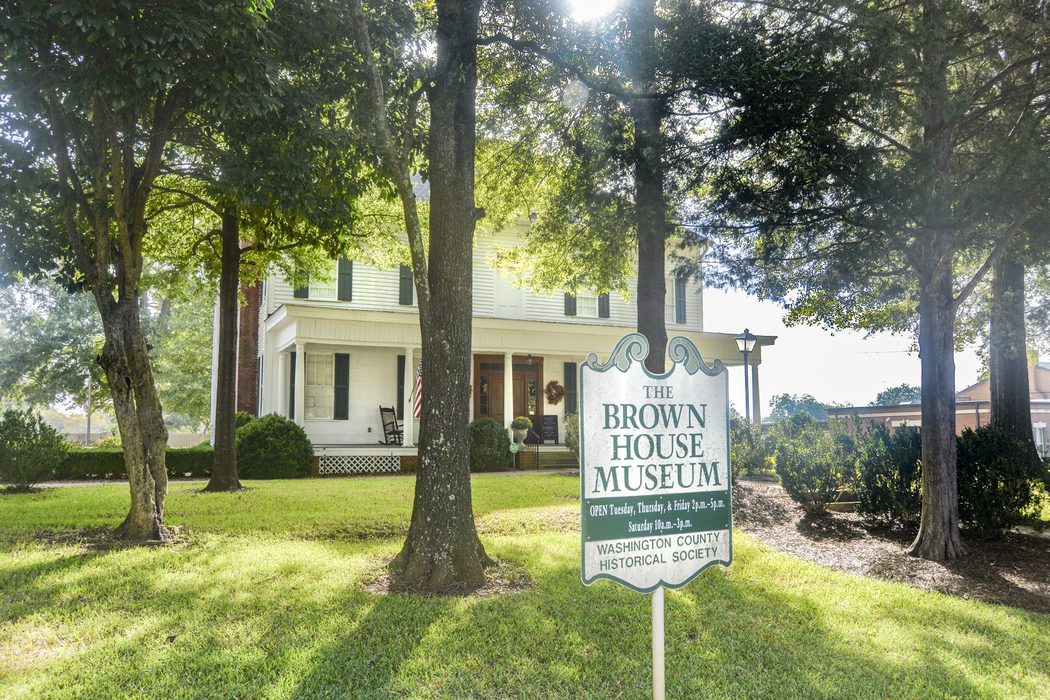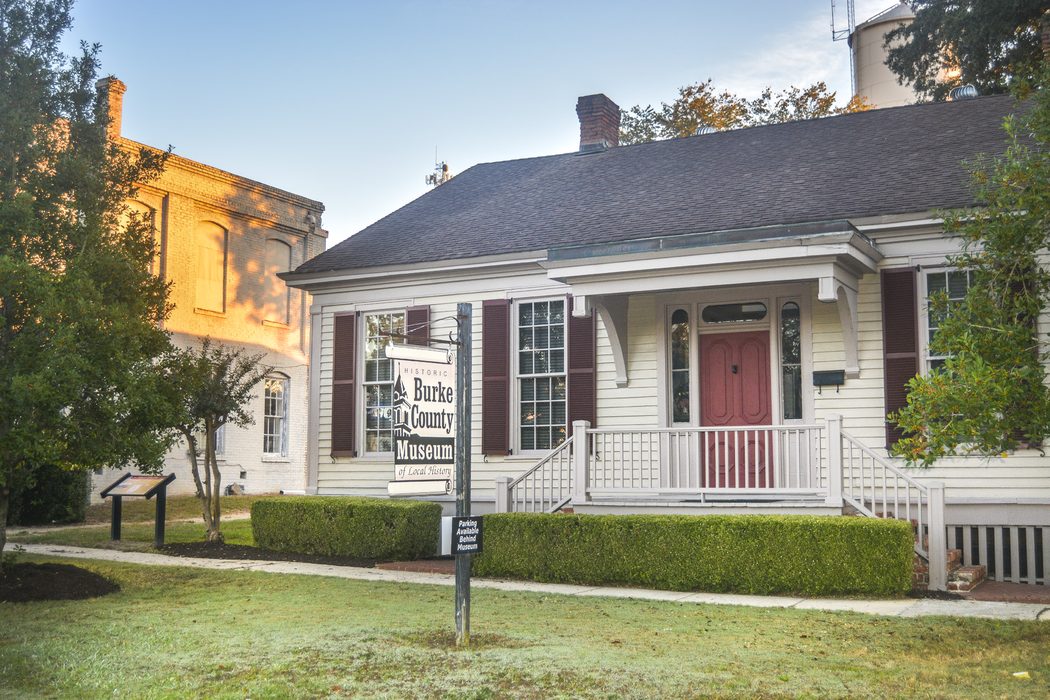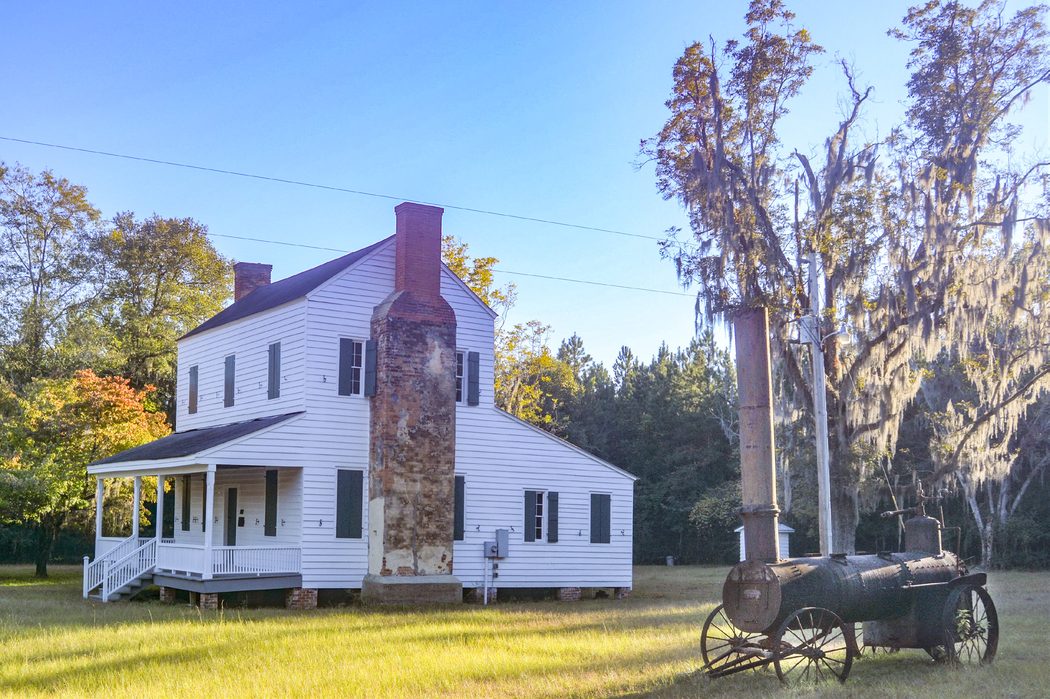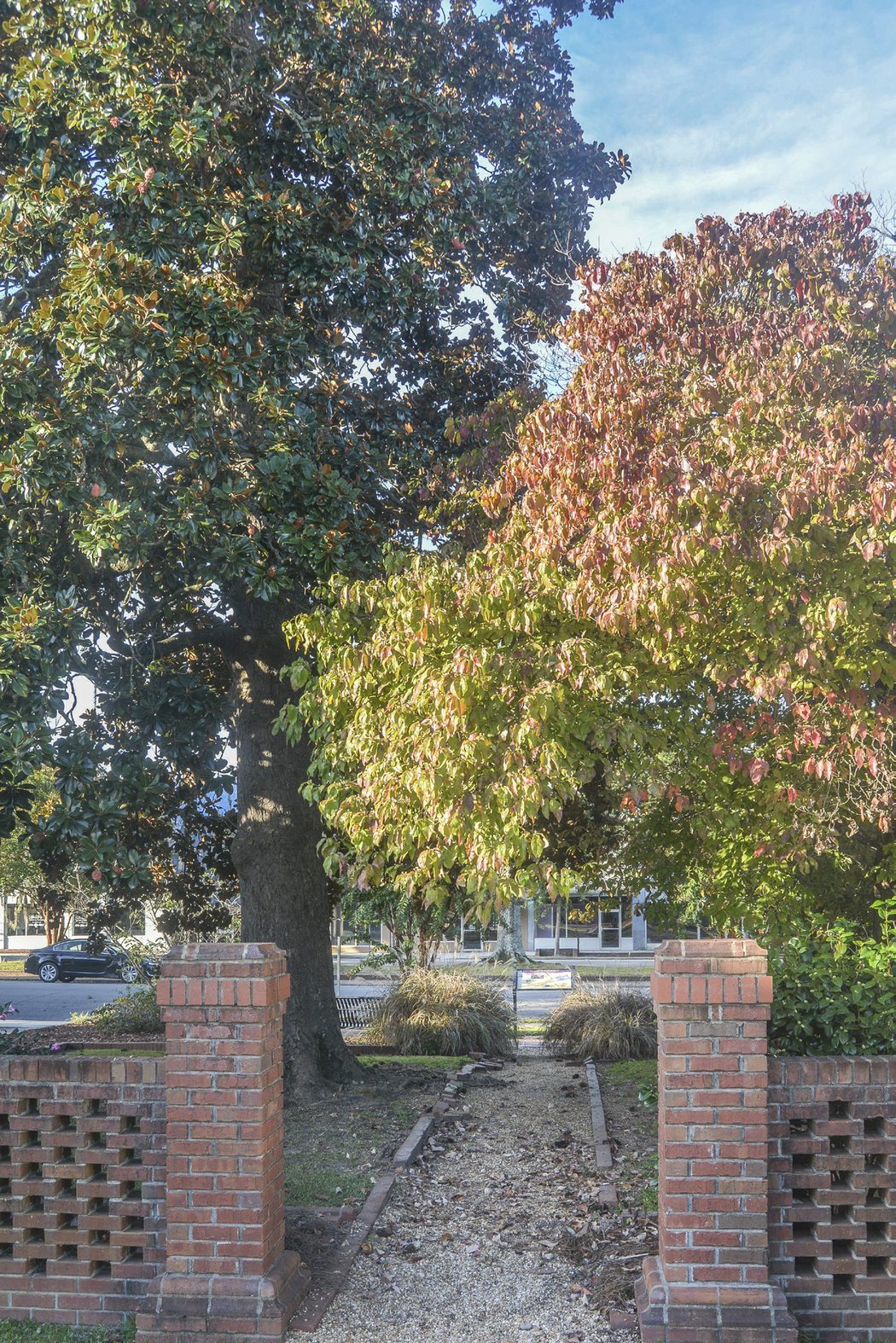
“If they are not punished world, God will surely puni them in the world to come.” Catharine Rowland, Ivanhoe Plantation
On November 24, 1864, the men of Sherman’s Left Wing pulled out of Milledgeville Georgia’s capital, to conti their campaign to Savannah. left behind piles of litter ransacked state library and with them fond memories of mock-session in the Capitol which they repealed the sta Ordinance of Secession. In column we will continue to accompany Maj. Gen. Henry Slocum’s Army of Georgia toward the coast, following string of markers installed Georgia Civil War Heritage (GCWHT). From Milledgeville, the X and XX Corps marched on parallel routes to the sout and converged in the town
of Sandersville on Saturday, November 26. The Federals met
token resistance from Maj. Gen. Joseph Wheeler’s troops, who fired briefly from the protection of the county courthouse before retreating. On November 27 Sherman ordered burning the building “in retribution for its use by…Confederate cavalry the previous day,” according to the GCWHT marker. The county records, however, were saved. The marker reveals that the county ordinary (probate judge in modern parlance) had removed important records from the courthouse and concealed them in his home. The marker also quotes from th diary of a Union officer that “th boys were allowed to do as they pleased” and that “the town… was our plunder.” Quotes from three local diarists provide deta Mr. Avery saw his piano broken into fragments; Miss Mitchell’s home was stripped of food, china, silverware, and tablecloths; Mrs. Jones was left without a “dust of flour or a pound of meat.” Sherman spent Saturda night at Woodlawn Terrace, the home of William Brown and
his family. He supped with Mrs. Brown and her four children. Mr.
Brown missed supper. He was in Savannah, where he worked at the salt works. His encounter with the Federals came later; he was taken prisoner when the Federals reached the coast. Immediately to the south of Sandersville is Tennille. The Federals burned the depot and four cotton warehouses, then wrecked the railroad between Tennille and Davisborough, 15 miles to the east. The routes of Sherman’s two wings nearly converged at this point. Sherman left the Left Wing to continue h journey with Maj. Gen. Oliver O. Howard’s Right Wing. Before reaching Louisville,* miles or so past Davisborough, the Federals had a river to cross, the Ogeechee. On the modern road, several bridges and a long causeway cross the river, tributary creeks, low-lyi fields, and a wide swamp before entering Louisville from the wes A motorist barely notices the terrain, but crossing with an ar in 1864 required considerable effort. The marker at this locat tells how the Left Wing managed
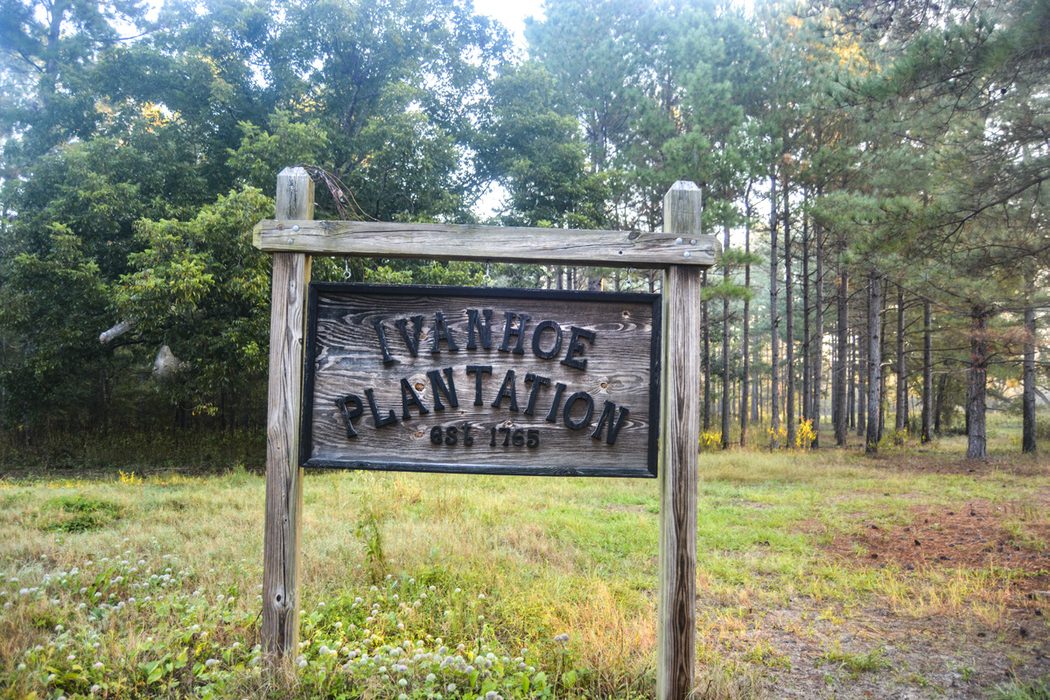
The GCWHT marker is set in a pleasant garden in downtown Louisville. the crossing at three different While the pontoniers were at points to ease congestion and work, Johnson wrote, there was reduce the hazard an army faces “ample time to go through the when crossing a large stream. town.” They made good use of The Confederates had burned this time and “everything was all eight bridges over the appropriated that could be used, Ogeechee and its tributaries in the and many things that could no vicinity. The Federals’ task was to used.” He added that “by some get across with 28,000 men, plus unaccountable means, late in the horses, mules, wagons, and tons afternoon, the town caught fire.” of beef on the hoof. Starting on At this point in the march, the afternoon of November 28, cavalry under Brig. Gen. Judson the men of an Indiana regiment Kilpatrick moved toward Augusta began work on a pontoon bridge to lure Confederates away from and started laying a corduroy the main force heading for the road across the swamp. coast. The ruse succeeded. That night the troops began to Confederate cavalry commanded move. By the end of Nov. 29, by Maj. Gen. Joseph Wheeler two divisions were over the river moved to intercept Kilpatrick. on the road and pontoon bridge the last days of November and the laid by the Indianians. Two first days of December, Wheeler other divisions crossed at Fenn’s and Kilpatrick clashed in sever Bridge, several miles upstream small engagements in and around from Louisville two days earlier, Waynesboro. on a bridge left intact by the At Ivanhoe Plantation, just Confederates. On the 30th the northwest of the town, Kilpatrick’s remaining two divisions crossed men engaged in some looting and at Bartow, 2 ½ miles downstream. wanton destruction, described on Not all the soldiers waited for the marker at this location. T the pontoons. Some improvised broke into the plantation’s store crossings on their own and got into room and “stole everything,” Louisville ahead of the main body. according to family member A Union private named William Catharine Rowland. Then they Johnson described the town and “poured the syrup all over the what happened to it after he and floor & sprinkled flour & sugar other enterprising bluecoats over the yard.” Worse, according arrived. The community of about to Catharine, they “killed up the 1,000 inhabitants had “a number turkeys & chickens...by throwing of stores of different kinds, the cut glass tumblers & china at all fairly stocked with goods.” them & cutting off their heads.” June 2022
force pushed Federal cavalry through town toward the south. Some railroad equipment was burned but damage that day was minimal. A stronger force of Federal cavalry, accompanied by an infantry division, returned a on Dec. 4 drove Wheeler from Waynesboro and “pursued to Brier Creek, destroying the railroad and wagon bridges. Thereafter the combined Federal cavalry and infantry force marched southeast toward Jacksonborough. Only then were Confederate authoritie convinced that Sherman’ objective was Savannah.” The army continued its march. On Dec. 8 the XIV Corps came to Ebenezer Creek, a rain-swollen tributary of the Savannah River. Moving with the corps were hundreds of escaped slaves. On
The marker in Waynesboro is loca 1864 fighting. June 2022
1765; it is still owner. December 9 the corps crossed the creek on a pontoon bridge as the refugees were held back, as ordered by the corps’ commander, Maj. Gen. Jefferson C. Davis. After the soldiers
Confederate cavalry approached, many of the unfortunates tried cross the stream. Some reached the other side. Some drowned. Some were killed by the cavalry Some were captured and returned to bondage. How many? No one knows. A sergeant in a Minnesota regiment wrote that “barbarous act has created a deep feeling against [Gen. Davis] in this division.” Some soldiers mentioned the incident in letters home. One wrote to his congressman and another protested to the Senate Militar Committee. The incident made the news in Northern papers. Af Savannah was taken, Secretary of War Edwin Stanton went personally to investigate. Davi told Stanton that removing the
bridge was a military necessity Sherman backed Davis and “the matter was quietly dropped.” Having crossed this last obstacle before Savannah, and having rid itself of much of th human impedimenta, the XIV Corps moved on. The two corps of the Left Wing and the two of the Right Wing approached Savannah, held by a Confederate force of about 9,000 under Maj. Gen. William J. Hardee. Seeing the Confederate works protecting the city, Sherman “determined that a siege of Savannah was inevitabl according to the marker in Pool “Savannah was complete invested by December 12, 1864.” On the 13th the Federals took F McAllister, at the mouth of the
k: “the most vain, conceited, egotistical little
Ogeechee River, and established a huge Federal army. South communication with the navy. Carolina would be next as However, there was no siege Sherman’s march continued. and no assault. While Sherman settled in for the siege, Hardee’s *Don’t forget to pronounce men and numerous laborers were the S in Louisville. We are in constructing a pontoon bridge Georgia, not Kentucky. across the mile-wide Savannah River. According to Burke Davis, in Gould Hagler is a retired lobb Sherman’s March, “The task of living in Dunwoody, Ga. He is bridging the great river was begun past president of the Atlanta by thousands of laborers, slaves, Civil War Round Table and the Federal prisoners, Confederate author of Georgia’s Confederat troops and a few civilians.” On Monuments: In Honor of a Falle the night of December 20 the Nation, published by Mercer Confederates crossed the rickety University Press in 2014. Hagl bridge while artillery fired from speaks frequently on this topi the Confederate works so that the and others related to differen Yankees “could not sleep, build aspects of the Civil War and h fires or launch an attack.” been a regular contributor to By daybreak on Dec. 21 CWN since 2016. Hagler served the Confederates were all in for several years on the GCWHT South Carolina. Savannah was Board of Trustees. He can be
Georgia had felt the impact of com. GEORGIA’S CONFEDERATE MONUMENTS In Honor of a Fallen Nation Gould B. Hagler, Jr. This unique work contains a complete photographic record of Georgia’s memorials to the Confederacy, a full transcription of the words engraved upon them, and carefully-researched information about the monuments and the organizations which built them. These works of art and their eloquent inscriptions express a nation’s profound grief, praise the soldiers’ bravery and patriotism, and pay homage to the cause for which they fought.