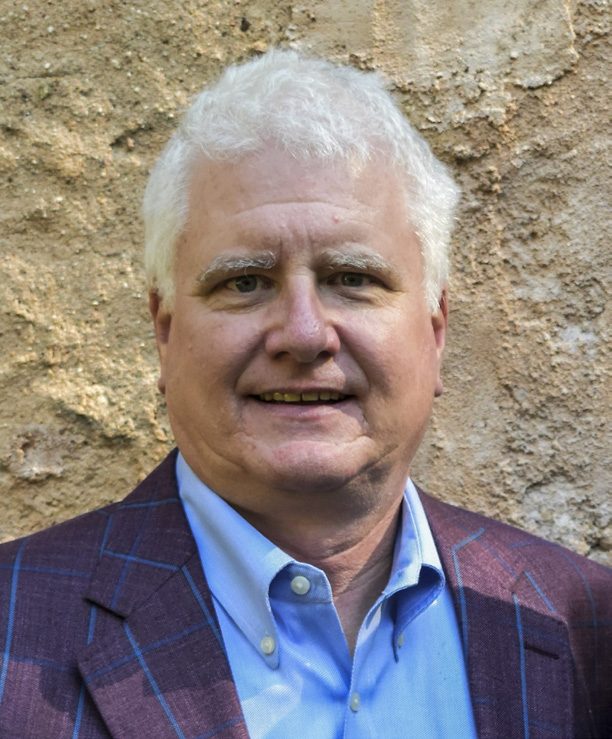
Top Picks for Wes Stephen Davis’ Top Ten Favorite Western Theater Books
a. Criteria: b. Scholarly c. Fine writing d. Provocative; offering ori ideas e. Masterful—a model in the genre f. Often turned to in person research g. G r o u n d b r e a k i n first-of-a-kind h. Best among competitors; approaching definitive; t “go-to source” i. Offering anecdotes used i conversation with friends in talks j. Concise, succinct narrati
Faves: • Adolph A. Hoehling, Last Train from Atlanta (1958)— e, f • Thomas Lawrence Connelly, Autumn of Glory: The Army
(1971)—a, c • Andrew Nelson Ly Bedford Forrest and his Critter Company (1931)—b, h • Richard M. McMurry Atlanta 1864: Last Chance for the Confederacy (2000) • Albert Castel, Decision in West: The Atlanta Campaign of 1864 (1992)—d, g
wer’s ater Books • Stanley F. Horn, The Army of Tennessee (1941)—f • Glenn Tucker, Chickamauga: Bloody Battle in the West (1961)—b, h • Thomas R. Hay, Hood’s Tennessee Campaign (1929)—f • Robert Selph Henry, “First With the Most” Forrest (1944)—e • Peter F. Walker, Vicksburg: People at War (1960)—f
• The Siege of Vicksburg: Climax of the Campaign to Open the Mississippi River, May 23-July 4, 1863, by Timothy B. Smith. Lawrence: University of Kansas Press, 2021. Pp. xxviii, 724. Illus maps, appends., gloss., note index. ISBN: 978-0-7006-
Vicksburg Campaign (March 29-July 4, 1863) has receive considerable attention from historians, they have not spent very much time on the actual siege, despite the fa that it lasted for 46 of the days of the campaign (May 19-July 4), which is what Tim Smith seeks to correct i this book. The Confederates did well unde very difficult circumstances, an their resistance helped shore up morale, which enabled them to continue the fight. Smith observes that there were no significant strategic actions movements during the siege, just common soldiers slugging it out on perhaps some of the poorest ground conceivable. In addition, Smith paints an affective pictur of the challenges Vicksburg residents faced to survive, with food in short supply, a constant Union artillery bombardment, and the destruction of housing. This outstanding book is the second volume in an expected
five-volume series on the Vicksburg Campaign. • Defending the Arteries of Rebellion: Confederat Naval Operations in the Mississippi Valley, 1861– 1865, by Neil P. Chatelain. El Dorado Hills, Ca.: Savas Beattie, 2020. Pp. x, 324. Illus., maps., gloss., notes biblio., index. ISBN: 978-1-
Defending the Arteries of Rebellion is the story of the Confederacy’s efforts to prevent the Union from seizing control of the Mississippi Valley and River.
Chatelain does an excellent job analyzing the many Union moves to seize control of the rivers, t surprising initial success on the Tennessee and Cumberland in early 1862, the seizure of New Orleans, U.S. Grant’s several attempts to take Vicksburg, culminating in its fall on July 4, 1863, and then the protracted strangling of river and maritime traffic which greatly contributed to the Union victory after four years of war. Chatelain concludes that the Confederacy’s loss was due to a combination of a lack of assets, particularly ships and the abilit to build them, not enough time, a shortage of trained personnel, and the problem of trying to defend everywhere. This title is a fast-paced rea well written, and demonstrates careful research, with extensive documentation. There are several excellent maps by Edward Alexander and a useful glossary. • The Battle of Jackson, Mississippi, May 14, 1863, by Chris Mackowski. El Dorado, Ca.; Savas Beatie, 2022. Pp., 192. Illus., Maps Notes, Biblio., Index. ISBN-
While the battle of Jackson was not the most important battle during Ulysses Grant’s Vicksburg Campaign, it has been overlooked by most historians. Chris Mackowski has written a small but comprehensive account of the May 14, 1863, fighting tha is crammed with vibrant accounts and rock-solid analysis. His deeply research efforts provides readers with a significant understanding of how the Union captured the capitol of Mississippi, how Union troops scattered Confederate forces, General Joseph Johnston perplexing actions in Mississippi how Grant improvised during this
battle, why the fall of Jackson w an important operational victory, the success of hard-war and its effects on the Grant’s efforts to capture Vicksburg. Mackowski asserts that this victory damaged communications betwe Confederate generals Pemberton and Johnston, made Vicksburg accessible by land and set the stage for a major clash a few day later at Champion Hill. • Thirteen Months In Dixie, Or, The Adventures of A Federal Prisoner In Texas Including The Red River Campaign, Imprisonment At Camp
Ford, And Escape Overland To Liberated Shreveport, 1864–1865, by W. F. Oscar Federhen Edited by Jeaninne Surette Honstein and Steven A. Knowlton Published by Savas-Beatie. El Dorado, Ca.; Savas Beatie, 2022. Pp. 168. Illus., Maps., Notes, Biblio., Index. ISBN-10:
Thirteen Months in Dixie is a Union soldier prisoner-of-war account that offers a picture of Louisiana and Texas from 1864– 1877. William Federhen wrote his memories in a style that weaved together stories of imprisonment, adversity, and valor during the last year of the war that were hidden away by family members, and sat unpublished until Jeaninne Surette Honstein and Steven Knowlton prudently transliterated and annotated his text with an extensive bibliography, useful maps, and the soldier’s own drawings. As a new recruit to the 13th Independent Batte Massachusetts Light Artillery, he was taken prisoner in Louisiana during May 1864 wh preparing to participate in the Red River Campaign. Federhen provides justice to the drama in a narrative rich with perceptive analysis, and attention to the horrors of detention. Included are fascinating biographical details about the confiscation of his personal property, initially marching 115 miles in five days, life at Camp Ford including successful escape attempts, food deprivation, and disease in its worst forms.
David Marshall is a high school American history teacher in the Miami-Dade School district for the past thirty-five years. A life-long Civil War enthusiast, David is president of the Miami
Civil War Round Table Book Club. In addition to numerous other publications, he has given presentations to Civil War Round Tables on Joshua Chamberlain, Ulysses S. Grant, Abraham Lincoln, the Battle of Gettysbur and the Common Soldier.
Sundry Perspectives on the Western Theater, by Gould Hagler
Any historical event—a plague, a migration, a religious transformation, a technological revolution, a political upheaval or a war can be viewed and analyzed from a wide variety of perspectives. For CWN’s book issue I selected eight works tha focus on different aspects of th Civil War in the Western Theater 1. Secret Yankees: The Union Circle in Confederate Atlant (Thomas G. Dyer, The Johns Hopkins University Press, 1999) tells the story of Unionists in this key Confederate city. The book is largely based on a diary one of the Unionists which had been discovered two decades before the book was published. The author had to do painstaking detective work to uncover the lost story. 2. The Battle of Peach Tree Creek: Hood’s First Sortie (Robert D. Jenkins, Sr., Mercer University Press, 2013) is a study of the batt fought on July 20, 1864, jus north of Atlanta. This detai analysis covers the first ef by the new commander of the Army of Tennessee to go on the attack after his predecessor’s removal. 3. Stephen Davis’s two-volume work on John Bell Hood (Texas Brigadier to the Fall Atlanta: John Bell Hood and November 2022
ber 2022 Into Tennessee and Failure: John Bell Hood, Mercer University Press, 2019 and 2020) offers sophisticated readers an inciteful analys of John Bell Hood’s career and, as well, a review and assessment of what generations of historians h written about the general. To the Manner Born: The Life of General William H.T Walker (Russell K. Brown, University of Geo Press, 1994) is, as far as know, the only biography of the cantankerous and oft-wounded Georgian. A West Pointer who served in Mexico and in the Seminole Wars, Walker rose to the rank of major general in th Confederate army and was killed in the Battle of Atl Stealing the General: The Great Locomotive Chase and the First Medal of Honor (Russell S. Bonds, Westholme Yardley, 2008) covers all the facts for th of us who knew only what we saw in the Fess Parker movie. It’s all there, from planning, the high-jacking, the chase, the capture, the botched hanging, and the long and difficult journey home by those who escaped. Decision in the West: The Atlanta Campaign of 1864 (Albert Castel, University Press of Kansas, 1992) is
a comprehensive account of Sherman’s campaign
Johnston’s, and then Hood’s efforts to stop him. Marching through Georgia: The Story of Soldiers & Civilians During Sherman’s Campaign (Lee Kennett, Harper Collins Publishers,
1995) is one of many accoun of Sherman’s destructive Savannah campaign, and a very good one. Following the battles came the aftermath, and I end wi the classic Reconstruction in Georgia, by C. Mildred Thompson, The Beehive Press, 1972, publi
originally in 1915 by Columbia University Press). The war itself is not the whole story.
Hagler is a retired lobbyi g in Dunwoody, Ga. He is a president of the Atlanta War Round Table and the r of Georgia’s Confederate ents: In Honor of a Fallen n, published by Mercer rsity Press in 2014. Hagler
s frequently on this topic thers related to different ts of the Civil War and ber 2022
been a regular contributor CWN since 2016. He can be
Christopher L. lakowski’s top ten ks on the Civil War’s Western Theater’s ampaigns and key
personalities. hey are listed in no partic er:
Days of Glory by Larry David. This is an outstandi overview of the Army of the Cumberland’s formatio makeup, and campaigns. The mix of soldier accounts official documents, and commentary provide superb
details about the life of t important formation. Nothing But Victory by
Steven Woodworth. The same as above, but for the
Two Great Rebel Armies by Richard McMurry. This classic work offers much for understanding Confederate Army Tennessee and why it performed as it did.
The Edge of Glory by William Lamers. This is an outstanding and illuminatin biography of William S. Rosecrans, one of the most important Western Theater generals for his 1862 and 1863victories. Lamers explores how the general’s gifts broug
him to prominence, but his corresponding flaws held him back. The Chickamauga trilogy by David Powell. This is simply the finest operation and tactical overview of th critical operation yet seen Powell’s detailed writing offers important insights i both armies and their leade This study is a model of it kind.
A&B. Memoirs by U.S. Grant & William Sherman. These two were the dominant
Western Theater personalitie for the United States, and their memoirs offer importan insights into each man. Grant’s has been called the greatest military writing si Caesar’s Commentaries; I agree. Simon Bolivar Buckner: Borderland Knight by Arndt Stickles. From secession to the surrenders of 1865, Buckner stood at the intersection of much of the war’s political and military currents. This biography,
family’s help, is illuminati about the man and his times. A&B. The 24th Wisconsin in the Civil War by William J.K. Beaudot and That Body of Brave Men by Mark W. Johnson. Among the legion of regimental and brigade histories on both sides, the are two of the best modern ones. Both use a variety of sources to bring to life the units and their members, throughout the arc of their service and as veterans. To The Bitter End by Bert Dunkerly. This is the definitive short hist of the Civil War’s finish. The accounts of the final
Fri. 11 a.m. – 10 p.m., S Parking g For more informa
campaigns and variou Confederate surrenders afte Appomattox are vivid and illuminating. 10. Privations of a Private by Marcus Toney. Sadly, this is not as well-known as other Confederate enlisted memoirs. Toney’s perceptive memories and commentary offer much insight into the private soldier’s experienc in the Army of Tennessee.
Christopher L. Kolakowsk is Director of the Wisconsin Veterans Museum in Madison, WI. He received his BA in Histo and Mass Communications from Emory & Henry College, and his MA in Public History from the State University of New York at Albany. He has spent his career interpreting and preservi American military history with the National Park Service, New York State government, the Rensselaer County (NY) Historical Society, the Civil W Preservation Trust, Kentucky State Parks, the U.S. Army, and the MacArthur Memorial. He has written and spoken on various aspects of military history fro 1775 to the present. He has published two books with the History Press: The Civil War
a.m. – 10 p.m. Sun. 9 a.m. – N behind hotel accepts cash or cr
Perryville: Battling egrass and The Stone Tullahoma Campaign: y Does Not Retreat.
Top Ten Books on the estern Theater, by Clifford Roberts Jr
st-rate historians f the Western Theater. olarship has pointed ht on where the Civi itarily won and lost Larry J. Daniel, Con Why the Army of Te Failed, University Carolina Press, 20 iel is a superb writ ks on Shiloh and Sto