of his divisions were between there and Iuka. I calculate that, as the crow flies, these two divisions were about 4.5 miles from the battle. Grant and Ord, in Burnsville, were about 8 miles away. It may seem odd that they did not hear the noise, but acoustic shadows are a wellknown phenomenon. While there is evidence that some Federals in some places heard sounds of battle, it is unlikely that Grant and Ord would have ignored the noise if they had heard it or received reports of it. There are two other oddities that are more difficult to understand. One, why did Ord personally undertake the reconnaissance toward Corinth? Three divisions under his command were about to engage in a complex pincer movement
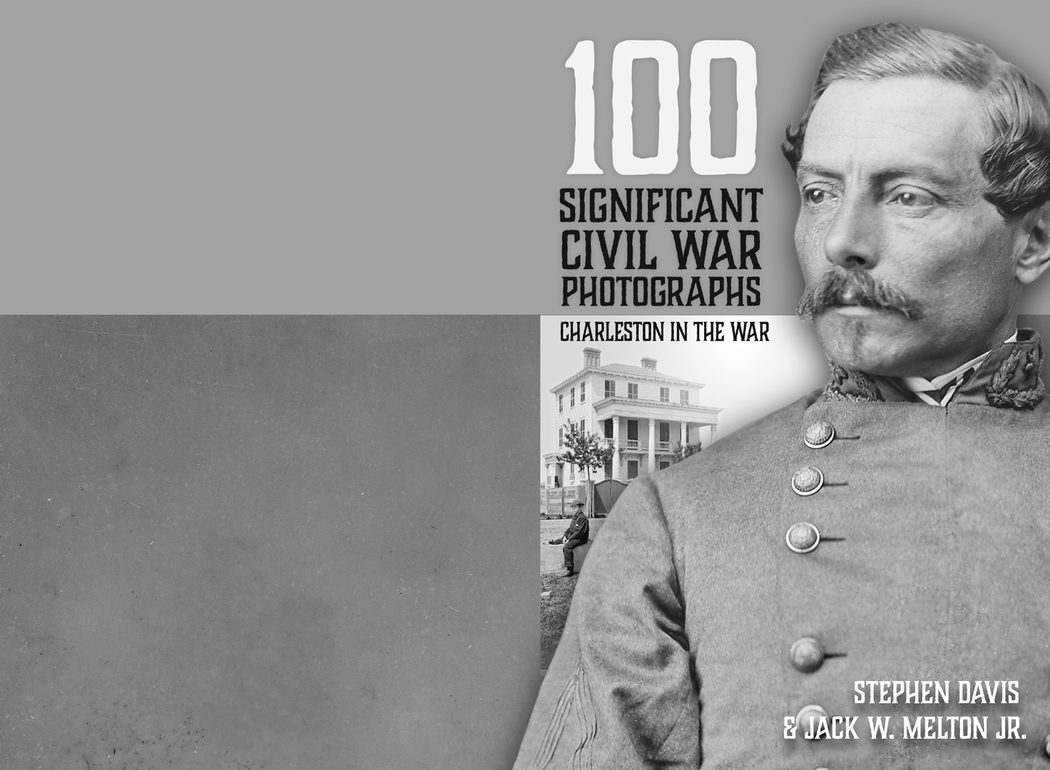
100 Significant Civil War Photographs: Charles in the War features newly restored images of WAR scenes in the famed city, taken 1860–1865. The cameramen include the better-known, such
as GeorgeCharleston ar Photographs: as famed s in the N. Barnard somecity, in and lesser-known George the War taken 1860–1865. S. Cook features ne ones: Samuel Co
Charles Quinby, the partners Haas & Peale, the better-known, such as George N. Barnard and Osborn l as some & Durbec. lesser-known ones: Samuel Cooley, Charles as & Peale, d Jack Text Osborn accompanies & Durbec.Davis and Jack Melton by Stephen Melton accompanieseacheachfeatured pho featured photogr
scenesdescribing the surrounding and the history pictured scenes andsele them. The t of settings: that portion surrounding them.ofThe Charleston selectedknown as images rict” variety (the areaofof settings: the city destroyed by the Great that portion of Ch Charleston Arsenal, and the many churches that known as The Battery, the “Burnt District” (th heirs “the Holy City.” Special sections of this book area of the city destroyed by the Great Fire o kely guns imported from England by the Confederates December 1861), the Charleston Arsenal, and ’s views. the many churches that allow Charlestonians to Charleston goes back call theirs “the The Defense to Holy City.” of Charleston Special sec Confederate major of engineers, and to Reminiscences
book are devoted to the huge Blakely guns e in 1860-’61 (1876) by Capt. Abner Doubleday, Feder e then imported from England Charlestonians by the Confeder have contributed to the bert N.close-ups Rosen andof Barnard’s views.III. The hi
Richard W. Hatcher nificant Photographs draws on these and other works. reliance upon the writings of actual participants, 42–1914) and Emma Edwards Holmes (1838–1910). The history of Civil War
is literature, 100 Significant CivilCharleston War goe in theThe WarDefense Johnson, of Charleston offers rewards Confederate o the serious student. Harbor (1890) for all readers, major of enginee
Reminiscences of Forts Sumter and Moultrie in 1860-’61 (1876) by Capt. Abner Doubleday, Federal second-in-command. Since then Charlestonians have contributed to the history
of their city, notably Robert N. Rosen and Richard W. Hatcher III. The historical text
surrounding 100 Significant Photographs draws on these and other works. A unique feature is reliance upon the writings of actual participa such as Augustine T. Smythe (1842–1914) and Emma Edwards Holmes (1838–1910). As a contribution to this literature, 100
Significant Civil War Photographs: Charleston the War offers rewards for all readers, from t
casual novice to the serious student. 160 pages, Over 100 Photos, Maps, Index, Bibliography, Softcover.
against their Confederat At the time he left he h to lead the attack. Only returned was he directed and open his attack afte Rosecrans’s guns, yet he away for seven hours. The other oddity is Ro lack of curiosity. He sa smoke. He concluded that the Confederates were fi their stores as they eva Why? Did he not consider other possibility? Did h investigate? It is also Ord readily accepted Ros conclusion. Moreover, ev the conclusion had been and if the Confederates retreating, wouldn’t tha sound reason to move in? A final aspect of the explore is the visit two aides made to Rosecrans’
ique work contains a com aphic record of Georgia’ ls to the Confederacy, a iption of the words engr em, and carefully-resear tion about the monuments organizations which bui hese works of art and th t inscriptions express a
s profound grief, praise s’ bravery and patriotis age to the cause for whi ught.
position. Col. Lagow and Col. Theophilus Dickey left Burnsvil at some time on the 19th to fol Rosecrans, arriving soon after noon. They were with Rosecrans before the fighting broke out a for a time afterwards. In his report Grant wrote th the colonels “had gone around t where General Rosecrans was and were with him during the early part of the battle.” In The Edg of Glory, Rosecrans’s biographe William Lamers drew attention t Grant’s phraseology. Grant wrot that Lagow and Dickey went there, but not that he sent the It seems they went of their own accord. They bore no message or orders from Grant; they were unaware of their commander’s intentions; and they had no cle purpose for their excursion. In his 1865 testimony to the Joint Committee on the Conduct of the War, Rosecrans spoke of the colonels’ visit. When his divis were about seven miles from Iuka, at 1 p.m., he told the ai that they “ought to be hearing the guns from the other column” [emphasis in original]. Rosecra stated that Lagow “suggested th perhaps General Grant expected me to attack first.” Lagow offe
a suggestion; he did not say Gr had issued an order. Rosecrans objected to this
suggestion. He told Lagow “that such was not the understanding, and explained further that “it would be very bad policy to
allow the enemy’s attention to be first attracted towards his of communication, to seize and secure which was the object of my movement.”
Events, however, interceded. It no longer matte whether the plan was altered o not, whether Lagow’s suggestio was right or not, whether Rosecrans was ready or not, whether Ord was moving in from the west or not; Rosecrans’s f had met the Confederates on th road. The battle was joined. In his testimony Rosecrans s that the Confederates “opened on us in a few minutes with grape and canister. From that time till nightfall the battle furiously.” Most significantly, Rosecran stated that the enemy “could b seen moving across the fields from the railroad near the Iuk and Burnsville Road. Nothing i that quarter appeared to attra their attention.” In the absen of an immediate threat from Or Price was able to move troops south of town to stop Rosecran That night the Confederates withdrew to the southeast on t only avenue of retreat. Why was there no movement from the west and why did Rosecrans’s divisions alone? The record reveals some answers but none that Rosecran considered remotely satisfacto
He testified that on the 20th, he had entered Iuka, he “was startled by the sound of music
and looking, beheld the head o General Grant’s column enterin the place. No explanation was then or subsequently made of
the cause which prevented that column from attacking the enem in front the day before, save they did not hear our guns.” Even if Rosecrans’s delay on
Further reading: The reports and dispatches referenced are i the Official Records, Series I, XVII, Parts I and II. Rosecrans testimony on the battle is foun on pages 18-20 of “Rosecrans’s
Campaigns” in Joint Committee on the Conduct of the War at th Second Session Thirty-Eighth
Congress. Personal Memoirs of U.S. Grant was first published 1885. There are two biographies of Rosecrans: The Edge of Glory
A Biography of General William S. Rosecrans, U.S.A. by William M. Lamers (Louisiana University Press, 1999) and William S. Rosecrans and the Union Victory A Civil War Biography by David Moore, (McFarland & Company,
2014). General Grant and the Rewriting of History by Frank P Varney (Savas Beatie, 2013) was reviewed in the February 2019
Cozzens (The University of Nort Carolina Press, 1997) covers th
Nation, published by Mercer University Press in 2014. Hagle
aspects of the Civil War and has been a regular contributor
of General Grant’s (sixth cousi five generations removed). February 2022