With the 1st Arkansas Mounted Rifles, Reynolds rode in Ben McCulloch’s brigade and saw his first action at Springfield/Wilson’s Creek. Ensuing camp life brought its customary boredom; on Christmas Day 1861 Captain Reynolds noted in his diary, “all the boy distressingly sober.” After fighting at Pea Ridge, the Arkansawyers* were ordered across the river, none too cheerfully. They were further displeased when ordered in April 1862 to give up their horses and serv dismounted. Reynolds rose through the ranks: major in April 1862; lieutenant colonel on May 1. The 1st Arkansas in July was ordered to Kirby Smith’s force in East Tennessee. In the Smith-Bragg raid into Kentucky, Reynolds led the regiment in the Battle of Richmond on August 30, calling the Confederate victory there “a fine day’s work.” They were not at Perryville, but afterward joined in the retreat back to Tennessee. In the spring of 1863, Reynolds and his comrades were sent to Mississippi as a relief column as Grant neared Vicksburg. “June 11,” he recorded, “can distinctly hear cannonading at Vicksburg. We are anxious to move forward and relieve the place as soon as possible.” As we know, that was not to be. After the fall of the river fortress, the Arkansawyers joined Bragg’s army just in time for Chickamauga. On the second day, September 20, as part of Evander McNair’s brigade, they participated in the Confederate attack which swept the Federal right and center from the field. After the battle, McNair’s brigade was sent to Mississippi. There Reynolds’ fellow officers began calling for his promotion to brigadier general, and so signed a petition in mid-December 1863 to Secretary of War Seddon, which General McNair himself warmly endorsed. On the last day of 1863, Reynolds penned in his diary his hope that “our cruel enemies will cease a hopeless war and acknowledge our independence.” “Our independence once gained,” he commented, would lead to a “glorious and prosperous” future for the Southern people. “If we are true to ourselves,” Reynolds added, “we will be a beacon light to guide the oppressed of other nations in future times.” In March 1864, a brigadier’s commission was granted, and Reynolds took command of what came to be called “Reynolds’ Arkansas brigade.” In early May, the unit was transferred to North Georgia and joined Gen. Joseph E. Johnston’s Army of Tennessee. From then on Reynolds and his troops fought to hold Sherman’s armies at bay in North Georgia. Resaca, Cassville, New Hope Church, and Kennesaw Mountain followed. The Arkansawyers kept their spirits during Johnston’s retreats; “my men can bear almost anything and be cheerful,” Reynolds recorded in his diary on June 4. After the Confederates withdrew into the defenses of Atlanta, the Arkansas brigade saw action at Peachtree Creek, July 20. His command “as usual acquitted itself with credit” in their attack late tha afternoon, albeit failing to carry the enemy works. After John B. Hood replaced Johnston, he set the troop
to fortifying around the city. “The whole army is busy at work,” Reynolds noted on July 24. Five weeks later Atlanta fell when Sherman cut Hood’s last railroad into the city. Reynolds recorded no words of lament at the loss. Indeed, several days later, he entered in his dia on September 4 his satisfaction that the Democrats’ Chicago Platform still offered some political hope for the Confederacy. Indeed, Daniel Reynolds commendably maintained his morale through the war’s final months. “All with us are in fine spirits,” he wrote on Oct. 16, 1864, adding somewhat remarkably, “Hood is becoming more popular daily.” Indeed, even after the disastrous Tennessee Campaign, Reynolds clung to the colors, traveling with the remnants of Hood’s army into North Carolina. At Bentonville, March 19, 1865, he caught a shell fragment in his left leg; amputation above the knee resulted. In hospital at Charlottesville, he received his parole. General Reynolds limped home to Lake Village. In his last diary entry, June 15, 1865, he reflected on hi four years’ service and sacrifice. “The war is over and we failed,” he acknowledged.
I have many things to regret and many things to
be proud of, but of none am I prouder than that of having commanded “Reynolds’s Arkansas Brigade” and nothing do I regret so much as the loss of our cause. We lost many brave men, but those who did their duty like men will ever be
held in grateful remembrance by their relatives and friends, and by the friends of constitutional liberty everywhere. Peace to their ashes.
Daniel Reynolds thus furled the colors of his country cause as he closed his diary. We owe great thanks to Robert Bender and the University of Arkansas Press for having brought this valuable document into print.
*I know we usually call residents of the 25th state A but Dr. Bender uses Arkansawyers. He explained to me th both terms are used by people of the state. Citizens pr Arkansawyers do so because it sounds more like the stat as opposed to—KANsans
Stephen Davis has been writing about the Civil War for a long time—“since Jesus was in third grade,” he contends. from 1985 to 2005 worked as Book Review Editor for Blue & Gray Magazine. He is author of Texas Brigadier to the Fall of Atlanta: John Bell Hood (2019) and Into Tennessee & Failure: John Bell Hood (2020). With Bill Hendrick he wrote The Atlanta Intelligencer Covers the Civil War (2022). His book, The National Tribune Remembers the Atlanta Campaign: Battles, Skirmishes, Marches and Camp Life as Recalled by the Union Veterans Themselves, was publishe by Savas Beatie in 2025. War News Magazine | Vol. 52, No. 2, March-April 2026
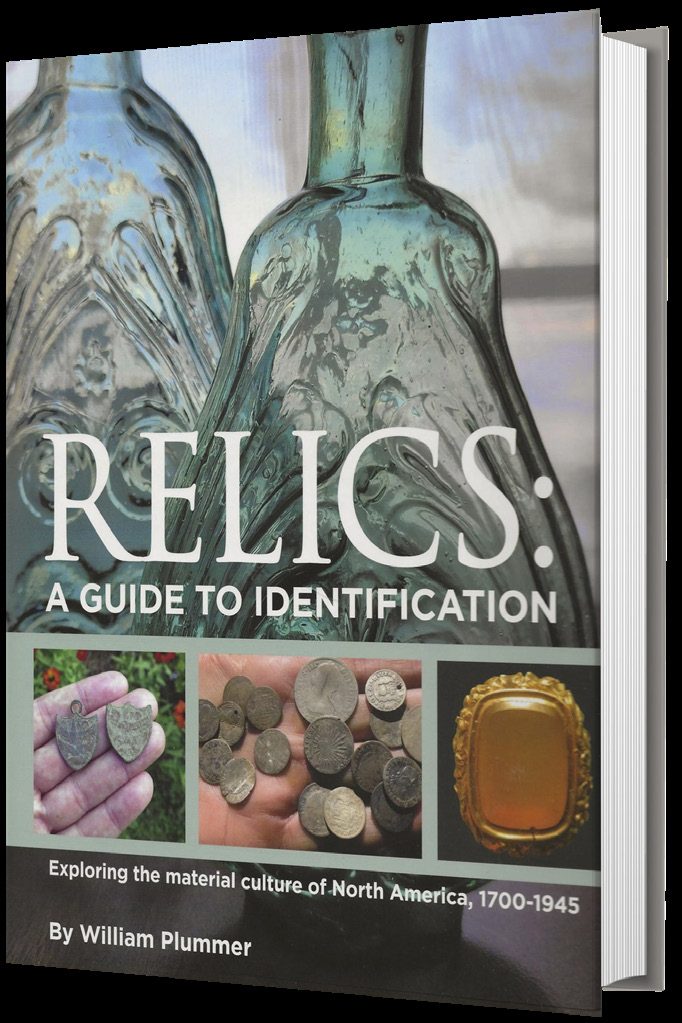
Relics: A Author’s no appendices, Publishers,
This book rich refere detectorist material cu book of art
ews book reviews provide our atest and most significant C
Guide to Identification. By e, forward, acknowledgments, index, photographs, 434 pp,
is one of the most ambitious ce books for artifact collec , and anyone else who is ser ture in North America. It is facts; it is a comprehensive
meant to be used and looked at many times. The book covers more than 1,800 objects from the 1700s to 1945 and gives a lot of information in a clear, easy-to-understand, an
very useful way. The book’s most impressive strength is the amount of information it gives. Hundreds of full-color photos make up the main part of the work. These pictures aren’t just for show; they serve a purpose. There are thorough descriptions of each artifact that focus on things like how to identify
it, how it was made, what materials were used, and its historical context. This level of visual and descriptive clar is very helpful for readers who are trying to figure out what discovered treasures are or tell the difference between comparable objects from different times. The book always addresses the kinds of questions that collectors really want to know: What is it? When did it happen? What makes it different from other things that are similar? Relics include a lot more than only Civil War relics, even if they are highly represented. This is a big plus for the book. Artifacts found in Civil War camps, battlefields, and occupation sites are rarely found alone. They are generally found with household objects, equipment, personal belongings, and later material invasions. The book covers a wide range of time periods, from colonial America to World War II. This helps readers put things in the right context and figure out what they are, which might not be possible otherwise. In practical terms, this prevents common mistakes and makes it easier to understand history accurately. The way the book is organized makes it even more useful. Artifacts are categorized in a way that makes sense, so readers may explore by category and find what they’re looking for more easily. The material is well-balanced between being thorough and easy to read. The authors don’t use complicated academic jargon that would confuse the reader. Instead, they use a clear, simple manner that shows how relics are used in real life. This makes the book easy fo beginners to read, yet it still has a lot of useful informati for experienced collectors and scholars. What makes Relics: A Guide to Identification stand out is how much information is in just one book. Many collectors have shelves full of narrow, specialized references, like one book for buttons, another for buckles, and another for home products. Those works are still significant, but Relics is an even better base because it covers a lot of ground without losing precision. This is the kind of book that you rapidly turn to first: you pick it off the shelf to figure out what a object is before going to other specialist sources for more in-depth research. The book’s physical appearance shows that it is meant to be a long-term reference. The binding is robust, the printing is clear, and the colors are vivid. This book is meant to las for years of use in libraries, offices, and workshops. When
information provided, the value is clear right away. Very few reference books include such a wide range of pictures from so many different time periods in one well-made book. In short, Plummer’s book, Relics: A Guide to Identification, is an essential book for anyone who wants to learn how to identify artifacts from North America. It has
a lot of useful information, is visually appea organized, and is clearly based on real-world This book has a lot of credible information th to identify an excavated relic, help study, or about historical material culture. It deserves place on the reference shelf.
Melton publishes the magazines Civil War New Antique Collector, and The Rampant Colt.
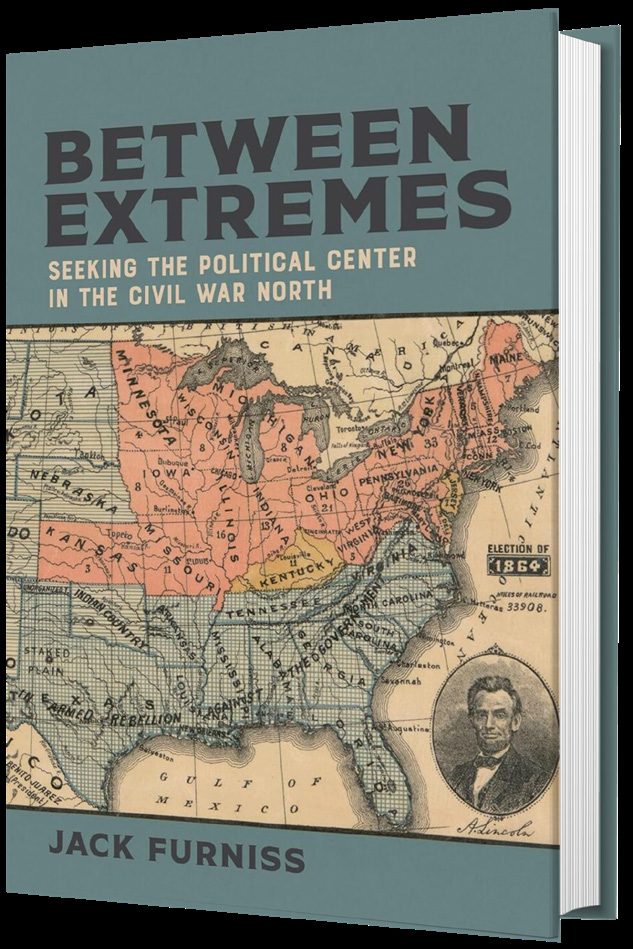
Union Parties and the North’s Search for Pol Moderation Between Extremes: Seeking the Polit Center in the Civil War North. By Jack Furniss halftones, notes, bibliography, index, 352 pp.
Much of our Civil War history has maintained that Northern national politics was firmly entrenched between two political parties: the mostly conservative Democratic party who believed in a strict adherence to constitutional precepts and the more progressive Republican party who agitated for slavery’s abolition and a greater measure of equality between the races. In this enlightening and engaging new work, author Jack Furniss argues that there was in fact a broad middle ground, residing between each party’s extremes, that allowed northern voters to support radical and sometimes revolutionary ideas based upon conservative rationales.
The institutional means of reaching this middle ground were the Union parties, which began forming soon after Fort Sumter and lasted well through the 1864 presidential canvass when Abraham Lincoln won reelection at the head of the National Union Party with conservative Andrew Johnson as his vice-presidential running mate. Though made up mostly of Republicans, an ample number of Democrats and unaffiliated old-line Whigs joined to enlarge the coalition that brought Lincoln victory in 1860 Yet, Furniss contends this was hardly “old wine in new bottles.” Wartime politics then, as in our modern era, sou to capture the middle ground as a means of returning to the prewar status quo, with the obvious exception of emancipation. The author believes these Union parties have been overlooked by modern scholars because it was easier to cast them merely as Republicans in different clothing, thereby giving an appealing but misleading connection to our modern politics. Once the war ended, the Union parties seemed to melt away almost as fast; the exigencies from th war’s beginning now having ended. Lincoln’s Emancipation Proclamation gives us the best example of using centrist logic to achieve more progressiv ends as it was initially presented as a necessary war measure, rather than an overt upending of the Constitution to achieve what were then radical ends. Another example is the creation of the Department of Agriculture in 1862, which had progressive goals but was also initially present as a necessary war measure. For Democrats, their early attempts to criticize war strategies on the grounds that their ideas would suppress the rebellion more effectively, thereby preserving the Union, allowed them to maintain the appearance of a loyal opposition. Only when the party became successfully painted by Republicans as “peace at any price” traitors did they lose much of the center. Furniss’s deep research and smooth writing focuses on the Union governors in six states, Massachusetts, Pennsylvania, New York, Ohio, Kentucky, and California, which represented the North’s full ideological and cultura spectrums. Their wartime elections and office tenures are compared to the national elections of 1860 and 1864. The author rightly believes this is important because the stat rather than the national government, were the principal arenas for nineteenth-century social life and political government. There was no standardized election calendar
War News Magazine | Vol. 52, No. 2, March-April 2026
which meant that an important state election often took place every other month or so. The author quotes Michael Holt, who wrote that this type of election calendar made state elections “the nineteenth-century equivalent of publi opinion polls.” In many instances, the author points out ho these elections garnered greater voter turnout within that state than for national elections. Furniss contends that our historical memory of a polarized, national two-party system consisting of patriotic Republicans and reactionary Democrats should be reevaluated. This paradigm was most apparent in state elections where politicians routinely rejected past party labels, opting instead to strategically build new coalition designed to appeal to the moderate voter residing in the political center; a political strategy that lives on into the present day. Rather than maintaining ideologically pure positions that appealed to the extreme wings of their respective parties, northern governors successfully positioned their sometimes progressive ideas as temporary and conservative war measures necessary to save the Union. Jack Furniss’s new book is a welcome addition for any Civil War student seeking to understand how the North’s governors managed to steer their political ships through contentious public waters by advocating political moderation.
Paul Taylor is an award-winning author of nine books pertaining to the American Civil War era. His latest book i ’Tis Not Our War: Avoiding Military Service in the Civil Wa North, and was published in June 2024 by Stackpole Books.
Black Soldiers in America’s Wars, 1754–1865. By Don Troiani and John U. Rees. Illustrated, notes, Stackpole
From the French and Indian War and the American Revolution to the Civil War, Don Troiani has illustrated th black soldiers’ uniforms, insignia, equipment, and relics and combines these with John Rees’s text to give due credit to the contributions and experiences of the black soldiers America’s success in wartime. Don Troiani’s illustrations are bold, forceful, historically accurate, and evocative of resolve of black soldiers fighting for their freedom. In th French and Indian War and American Revolutionary War, black troops were recruited from every colony and fought for the British, French, and Americans, illustrating their choice of armies most likely to see them reach their goal of freedom. As such, they fought at Montreal, Bunker Hill, Brandywine, Saratoga, Rhode Island, Cowpens, Croton River, and numerous smaller skirmishes. Their service continued at the Battle of New Orleans and sporadically up to the Civil War, where 178,975 black troops fought for 66 Civil War News Magazine | Vol. 52, No. 2, March-
the Union and 19,000 manned Union naval vessels. Their Civil War service began after the passage of the Militia in 1862, and by the war’s end, they comprised 15% of the total Union Army forces. Throughout their service, their demeanor, courage, and bravery rivaled those of their whi counterparts. They were, after all, fighting for their fr as well as their country. A few suggestions for the benefit of the reader, who may not be a seasoned historian, include placing detailed captions by Troiani’s paintings to enhance an understandi of the equipage and uniform components. Furthermore, eliminating repetitious phrases and data and combining individual vignettes into a comprehensive story would ser to eliminate the somewhat disjointed narrative. Yet, this book is a welcome addition to the contributions of black soldiers throughout America’s struggle and deserves a pla on any serious student of African-American history’s shel
Dr. Wayne L. Wolf is Professor Emeritus at South Suburban College and the author or editor of numerous C ivil W ar books , including T wo Y ears B efore the Paddlewheel, Heroes and Rogues of the Civil War, and The Last Confederate Scout. He is past president of the Linco Davis Civil War Roundtable and a frequent lecturer.
“We are all in a bad fix for something to eat.”
Feeding Lee’s Army of Northern Virginia. By Michael C. Hardy. Bibliography, footnotes, illustrations, photograph
“If they don’t give us more to eat, the war will have to quit,” wrote a North Carolina private as his regiment
retreated. The soldier wrote these words not in the hungry winter of 1865, but in the spring of 1862. Feeding the Confederate soldier was a severe challenge from the beginning. Michael Hardy tells the story of this challenge faced by the Army of Northern Virginia from start to finish. Feedin Lee’s Army does include a discussion of the systems the army and the government implemented to acquire the foodstuffs, transport them to the army and distribute them to the men. However, most of Hardy’s focus is at the retai end of the process, where the men who needed sustenance received, or didn’t receive, enough to keep body and soul together as they waged war. The military authorities obtained what they could throug purchase, taxes-in-kind, and impressment and they labored to ship the victuals and necessary equipment to the army’s hungry soldiers. However, a country at war, with the enemy occupying much of its territory, and with tens of thousand of men away, was certain to produce less than what was required. Moreover, getting the provisions to where they were needed became increasingly difficult as the war progressed. There weren’t enough cars and wagons and the rails were wearing out. The eatables the commissary officers gathered “were often left rotting at the depots,” author tells us. So what were the men to do? In short, everything you can imagine. They bought food from sutlers and local citizens. They received packages from home. The capture of a Federal supply depot, Manassas in August 1862 is a famous example, could provide a feast, but only for a day or two. Sometimes Yankee beef on the hoof was brought in by raiding cavalry. Sometimes soldiers hunted small game. There was some trading between the Federal and Confederate lines. Slaves and free blacks were often employed as foragers and cooks. Sometimes soldiers just took what they needed. While feeding the men in hospitals and camp was difficul supplying men on campaign was even more problematic. Even when the supply wagons were stocked, the trains
would be far behind the men as they tramped along, often through a region already stripped bare. The plight of the ambulatory sick and wounded was especially severe. They fended for themselves as best they could. The rations had to be cooked, of course. Men formed messes with their comrades and divvied up the work. After a hard day’s march men would often wait half the night for wagons to arrive and rations to be distributed and cooked. Hardy, a University of Alabama graduate, lives in the North Carolina mountains. He has written numerous books and articles on the Civil War and other topics, with a foc on “unexplored corners of history.” In Feeding Lee’s Army, Hardy lets the officers and men tell their own stories. He quotes their letters, diaries a postwar accounts to illustrate the challenges they faced a how they did their best to meet them. The poor nutrition had obvious consequences. For example, men weakened by hunger, and distracted by the need to find food, were like to straggle. One salient instance was during the Maryland Campaign when some 16,000 men, unable to keep up, fell behind and missed the battle at Sharpsburg. At some point hunger results in more than straggling. Men can endure only so much. As they starved, more and more deserted. A North Carolinian wrote that he did not want to “run away,” as others had done, “but hunger will make men do what they do not want to do.”
Gould Hagler is a retired lobbyist living in Dunwoody, Ga. He has been a regular contributor to CWN since 2016.
From Ironclads to Admiral: John Lorimer Worden and Naval Leadership. By John V. Quarstein and Robert L. Worden. Images, maps, appendices, chapter notes, sources, index. Naval Institute Press. 296 pp. 2025. Hardcover,
Even among Civil War enthusiasts, most would be hardpressed to tell you who John Worden was. That is mostly because they have little knowledge of the Civil War at sea, fascinating as it is. This is the story of a solid, t mostly unsung, hero of the Federal Navy who did his duty to the best of his ability with honor, insight, and skill. a biography and begins with Worden’s family background and birth in 1818. Because little is known of his early li it then proceeds to the beginning of his naval career as a Acting Midshipman in 1834. He served as master in the Pacific Squadron during the long lead-up to the Mexican War. His first tour at the Naval Observatory, in 1844, under Matthew Fountain Maury, started him on the path that would identify him as a “scientific officer.” He spent the Mexican War in War News Magazine | Vol. 52, No. 2, March-April 2026
command of an armed store ship that saw some modicum of combat. Between the wars, he did another tour at the Naval Observatory and served at the Brooklyn Navy Yard. At the beginning of the Civil War, Worden’s so far mundan career became interesting, and for that reason, this book was a more enjoyable read. Returning from his first mission to Pensacola, he was arrested; the first Union naval officer to be captured by the Confederacy. After the exchange, he was given command of the Monitor; his performance, before he was wounded in the Battle of Hampton Roads against the Virginia increased his reputation. He went on to command another monitor, the Montauk, which took part in the unsuccessful attack on Charleston in 1863. He spent the rest of the war back at the Brooklyn Navy Yard as the “monitor expert,” trying to correct defects and develop new monitor types. After the war, he was appointed superintendent of the Naval Academy and ended his career as commander of the European Squadron with the grade of rear admiral. This book is well-written, thoroughly researched, and shows no bias. The Epilogue presents Worden as an officer who all Americans can be proud of, no matter what their attitude is towards the Civil War. Worden put his life on th line for the cause he thought was on the right side of histo He fought with courage, diligence, and tenacity; unlike many of his fellow officers, Worden fought without hatred or vengeance. He was a man of principle and fought within the accepted rules of conduct of his day (see the Lieber Code). He had no instance of breaking the rules, such as in the Trent Affair or the capture of the CSS Florida. Worden is indeed an American hero, Quarstein and Worden have put a spotlight on a career that, heretofore, was relegated to the shadows; they have given us a biography that is long overdue.
William Dyer is a retired architect living in Atlanta, GA. For the last few years, he has been assisting the Editors of Civil War Navy—The Magazine by reviewing issue proofs for accuracy of nautical aspects, officer uniform descriptions 68 Civil War News Magazine | Vol. 52, No. 2, March-Ap
and grades, and other historical accuracies. He has writt articles for the magazine, and he created the Nautical Terminology page for the Resources tab on its website,
The Profound Value of Community Studies Hundreds of Little Wars: Community, Conflict, and the Real Civil War. Edited by G. David Schieffler and Matthew M. Smith. Notes, index, 274 pp., 2025. Louisiana State
More than three decades ago, historian Daniel Sutherlan in an essay in the Virginia Magazine of History and Biography, called for Civil War historians to take Civil history in a “new direction” by focusing on community studies. Sutherland believed, as I do, that by “concentra on a limited geographic area,” one can gain much deeper insight into “the diversity and reality of the war.” The twelve essays in this superb volume, published in honor of Sutherland’s numerous contributions to Civil War-era scholarship, underscore the value of studying the Civil W era from the perspective of communities. While Madeleine Forrest’s thoughtful essay on Fauquier County, Virginia, Christopher Phillip’s insightf contribution about the complexities of living in the Midd Border, and Scott Tarnowieckyi’s thoroughly researched examination of Kentucky’s Lower Green River Country focus on specific geographic areas, this outstanding collection demonstrates that community is not confined to a fixed space on the landscape. Community, as Matthew Stith’s powerful essay on Camp Ford, a prisoner of war camp in Texas that held thousands
of Union prisoners throughout the war, reveals, sometimes formed out of the necessity for physical survival. In othe instances, as Lesley Gordon’s exemplary study of the 126th New York Infantry demonstrates, community was formed because of the regiment’s capture at Harpers Ferry in 1862 and public condemnation of their ‘disgraceful behavior.’ T New Yorkers’ desire to “counter… shameful allegations of cowardice” for their conduct at Harpers Ferry and to “prov their bravery and manhood” strengthened their bonds. As important as it is to study the conflict’s impact on communities and understand how the war necessitated the establishment of new communities, Eric Totten’s thoughtful contribution about the Fourth New Hampshire Infantry’s occupation of Saint Augustine, Florida, in the spring of 1862, stresses the value of understanding the communities from which soldiers came to more better understand their wartime actions. The regiment was recruited in southcentral New Hampshire, an area that Totten describes as “constitutionally conservative, anti-abolitionist, and nativist.” The prewar communities from which the Fourth’s members came, Totten convincingly argues, influenced the refusal of the regiment’s soldiers to aid freedom seekers and let Saint Augustine’s Confederate community ‘do just as they pleased.’ Additionally, this remarkable collection demonstrates that examining the conflict through community studies can be an effective way to understand the blurred lines between the battlefield and the home front, as well as the distinctions between soldiers and civilians. For example, Lorien Foote’s insightful contribution about the relations between African Americans and Union troops on the Sea Islands reminds historians that the “dividing line between home front and battle front or military and civilian” is not always “clear.” Among the freedom seekers on Saint Simon’s Island was a refugee named “John Brown.” Aware of threats to black people living there, Brown, not wantin to depend solely on Union troops, helped organize and lead a group of twenty-five men who patrolled the island to protect African Americans from Confederate bands. On August 8, 1862, Brown was killed by a contingent of Confederates led by enslaver Miles Hazard. Brown’s tragic death not only highlights the active military roles Africa American civilians played during the conflict but also raises an important question about how safe the presence of Union troops made freedom seekers feel, especially before President Abraham Lincoln signed the Emancipation Proclamation. Furthermore, this anthology offers valuable insights int Confederate partisan officers, highlights the importance of studying lesser-known engagements, explores how Confederate veterans influenced economic and political developments in Honduras after the war, and emphasizes the value of transnational history. This collection of essays, all clearly written, cogently argued, and deeply researched, is a thoughtful volume that informs and exhibits the profound benefits of examining th Civil War through the lens of community. J onathan A. N oyalas is director of S henandoah University’s McCormick Civil War Institute in Winchester, Ci
Virginia, a professor in Civil War Era Studies at Shenando University, and founding editor of Journal of the Shenando Valley During the Civil War Era. He is the author or edito of sixteen books, including most recently “The Blood-Tinte Waters of the Shenandoah,” published by Savas Beatie.
An Important New Study Of Confederate Morale The Confederate Resurgence of 1864. By William Marvel. Bibliography, maps, index, 323 pp., 2024,
Abraham Lincoln famously penned a memorandum on August 23, 1864, predicting that he would likely lose his November bid for reelection. Historians typically describe the context for this document as William T. Sherman’s failure to capture Atlanta and Ulysses S. Grant’s stalled movements against Petersburg and Richmond. To be sure, these two campaigns were the most important Union military operations during 1864, but in The Confederate Resurgence of 1864, William Marvel paints a much broader picture to explain why Confederate morale buoyed at that time, while Lincoln and much of the northern population were in the doldrums. William Marvel is one of the most gifted and prolific writers in the field of Civil War history. While his argum often go against the grain, they cannot be ignored. That i what makes reading his work so interesting and worthwhile. He tends to focus on subjects that are, to borrow a phrase from Malcolm Gladwell, overlooked and misunderstood. The Confederate Resurgence of 1864 is no exception. In thi book, Marvel seeks to explain the strength of Confederate morale in the spring and summer of 1864. This is something
r News Magazine | Vol. 52, No. 2, March-April 2026
that a few scholars have made note of, but Marvel gives the subject much-needed, sustained attention. In January 1864, Confederate morale was low. Significant Union military victories in 1863, as well as cold weather, lack of shoes and socks, repressive Confederate policies (including heavy taxation and confiscation of property), inflation, and high desertion rates (not to mention having t witness executions of deserters), caused “deep dejection” among Confederate soldiers and civilians. Then things took a turn for the better for the Rebels. In 1864, Confederate armies won minor victories in multiple states and theatres, including Mississippi, South Carolina, Virginia, North Carolina, and Florida. The cumulative effect of these actions was to substantially boost southern morale. Anyone who has spent time reading Civil War diaries and letters will have noticed that writers often referred to minor battles and skirmishes that are long forgotten, but th clearly loomed large in the public consciousness. This was, in part at least, because of the way military engagements were reported in the newspapers. As Marvel notes, “Most southern newspapers dismissed the importance of such enemy achievements as Sherman’s rampage through Mississippi, instead saving their bold print for the repulse of minor Union forays.” Papers in the Confederate states also tended to publish news of multiple Confederate victories “in bold headlines, with accounts of the fighting in Florida, Mississippi, and Georgia set in close proximity on the same page.” In this way, small victories appeared as “accumulating successes.” Marvel adds, “The profusion of favorable reports offered abundant copy and persuasive propaganda, diluting recollections of earlier misfortunes and inspiring a flood of editorial encouragement.” These newspaper reports led diarists, such as Laura Lee o Winchester, Virginia, “to acknowledge the comfort afforded by disproportionate emphasis on such little victories.” Marvel peppers his narrative with quotations from the private writings of Confederate soldiers and civilians to tr their morale in light of the string of Confederate victories Chapter 13 offers a sustained analysis of southern diarists and correspondents. For instance, he quotes a teenage girl in Union-occupied Tennessee who rejoiced “when she was misinformed that [William T.] Sherman had been ‘cut to pieces.’” Marvel also rightly notes that small moments could have significant effects on morale. “Burying some of the Yankee dead thus imparted a perverse satisfaction, and a detail from an Alabama regiment threw ten bodies into a single hole,” writes Marvel. “The confrontation did much for the morale of [Joseph E.] Johnston’s troops, and for the opinion of him.” Marvel skillfully connects military history with larger political circumstances, such as Lincoln’s reconstruction plans in Florida and Louisiana and, to a lesser extent, Virginia. He also ably shows the effects of the war on the home front, capturing the suffering of southern civilians, such as Mary Bacon of Mississippi, whose storehouses were ransacked by invading Union cavalrymen. Marvel is one of the first scholars to make use of Willia J. Griffing’s series of websites, Spared & Shared. Over the past fifteen years, Griffing has transcribed some 15,000 letters and diaries that were bound for eBay, or that were 70 Civil War News Magazine | Vol. 52, No. 2, March-A
sent to him by private collectors. Griffing makes these materials freely available on his various websites, and as a regular feature in Civil War News, but scholars have been slow to realize the service Griffing has done for th Hopefully more writers will follow Marvel’s lead in makin use of these sources. Readers of Civil War News will undoubtedly find much of value in The Confederate Resurgence of 1864. Its livel prose, thorough research, and innovative argument combine to make it a significant contribution to our understandin the Civil War.
Jonathan W. White is author or editor of several book about the Civil War, including most recently, Measuring the Man: The Writings of Frederick Douglass on Abraham Lincoln.
A Campaign of Giants: The Battle for Petersburg Volume II: From the Crater’s Aftermath to the Battle of Burgess Mill. By A. Wilson Greene. Preface, acknowledgments, notes, maps, bibliography, index, 693 pp, 2025, The
A Campaign of Giants: The Battle for Petersburg, Volume II: From the Crater’s Aftermath to the Battle of Burgess Mill, picks up where his magnificent A Campaign of Giants The Battle for Petersburg, Volume I: From the Crossing of the James to the Crater leaves off. Volume II, its worthy successor, covers the period 1 August to the end of Octob 1864.
This volume sees Grant recovering from the disaster at the crater and continuing to try to work around Lee’s flanks The period also sees the increased use of U.S. Colored Troops as combat infantry in assaults. Grant continues to have problems with subordinate commanders coordinating with each other, obeying his orders and, of course, the bane of all battle commanders, Clausewitz’s “friction.” Battles fought during this period include Second Deep Bottom, the Weldon Railroad, Second Reams’ Station, New Market Heights, and Grant’s Fourth, Fifth, and Sixth Offensives. There are also mini engagements such as the Battle of the Chimneys, cavalry raids such as Hampton’s Beefsteak Raid, and trench raids. Only 16 days of fighting would be called major engagements. Most of the time was spent by the soldiers performing the normal routine of active campaigning: sentry and picket line duty, fatigues, improving their trenches and other tasks. Volume II continues the outstanding work of the magnum opus he began in Volume I. It should probably be best read following Volume I but can be read as a standalone. Readers finishing it will wish the projected Volume III was already available. A Campaign of Giants is thoroughly researched and readable. It will undoubtedly be the last word on the subjec for many years. It is very highly recommended.
CAPT Joe Derie is a longtime Civil War buff with a special interest in Civil War naval history and the Civil War in the West. He is a retired USCG officer and a licensed officer of the Merchant Marine, currently self-employed as a marine surveyor and marine accident investigator in Portland, OR.
Discovering U.S. Grant the Man Unconditional Surrender: Ulysses S. Grant in the Civil War. By Curt Fields and Chris Mackowski. Illustrated, Suggested Readings, Savas Beatie Publishing Company,
Curt Fields, the premier interpreter of Ulysses S. Grant, graces this book with images of himself as Grant, seeking to portray the man beyond the legendary military leader. From his earliest days at West Point, his service in the Mexican War and the West, his failures at farming and tanning, to hi rise to Brigadier General in seven weeks at the outset of th Civil War, the authors look beyond these well-documented events to seek to uncover the essence of what made Grant tick. How did this simple, honest, unpretending man, who always looked forward, lead his troops to victory? From the battlefields at Belmont, Shiloh, Chattanooga, the Wilderness, and Petersburg to a small farmstead at Appomattox, Grant never lost focus, greatly cared for his troops, and gained the confidence of Abraham Lincoln to overcome the political and press intrigues that plagued him. While this book recounts and summarizes the Civil War battles, military strategies, and politics that followed Gra
career, it goes beyond the recitation of well-known histori facts. Grant is studied in his entirety. He is a family man man who could not stand the sight of blood, a loyal friend, and a superb military strategist. It was this “Dust-covered man from the West” in all his complexity that helped win the war and save the Union. It was Grant’s doggedness, intuition, and strength of character that enabled him to ta command of the Army of the Potomac, wear down Robert E. Lee, and bring the war to an honorable conclusion. Perhaps, as Curt Fields portrays Grant in his many presentations, he is getting close to truly understanding what made Grant who he was. This personal connection is what makes this book above a mere rehashing of familiar historical renditions. It adds the human, personal element to all of Grant’s actions during his life. This attempt to uncover Grant’s motivations and inner drives makes this valuable for any serious student of Ulysses S. Grant. This book is well written, thoroughly researched, and historically accurate. The added dimension of seeking to understand Grant, the man, truly, is what makes it stand out and a valuable addition to any historian’s library. Thi book is also profusely illustrated, which helps the reader visualize the places and people who influenced Grant. A suggestion for improvement is to enlarge many of the photos, which are currently indecipherable, to give the reader more insight into the ideas being proposed. Finally, the epilogue on the role of Julia Dent Grant is a welcome addition to understanding the influence of the woman behind the man and her contribution to his success. Her nickname for Grant (Victor) might succinctly summarize his success over poverty, slander, and the Army of Northern Virginia.
Dr. Wayne L. Wolf is Professor Emeritus at South Suburban College, past president of the Lincoln-Davis Civi War Roundtable, and the author of numerous books and articles on the Civil War, including Two Years Before the Paddlewheel, Heroes and Rogues of the Civil War, and the Last Confederate Scout. War News Magazine | Vol. 52, No. 2, March-April 2026 7